
From Missing the Mark to Finding Her Voice:
Eliza Fricker on Becoming Unquiet
From Missing the Mark to Finding Her Voice: Eliza Fricker on Becoming Unquiet
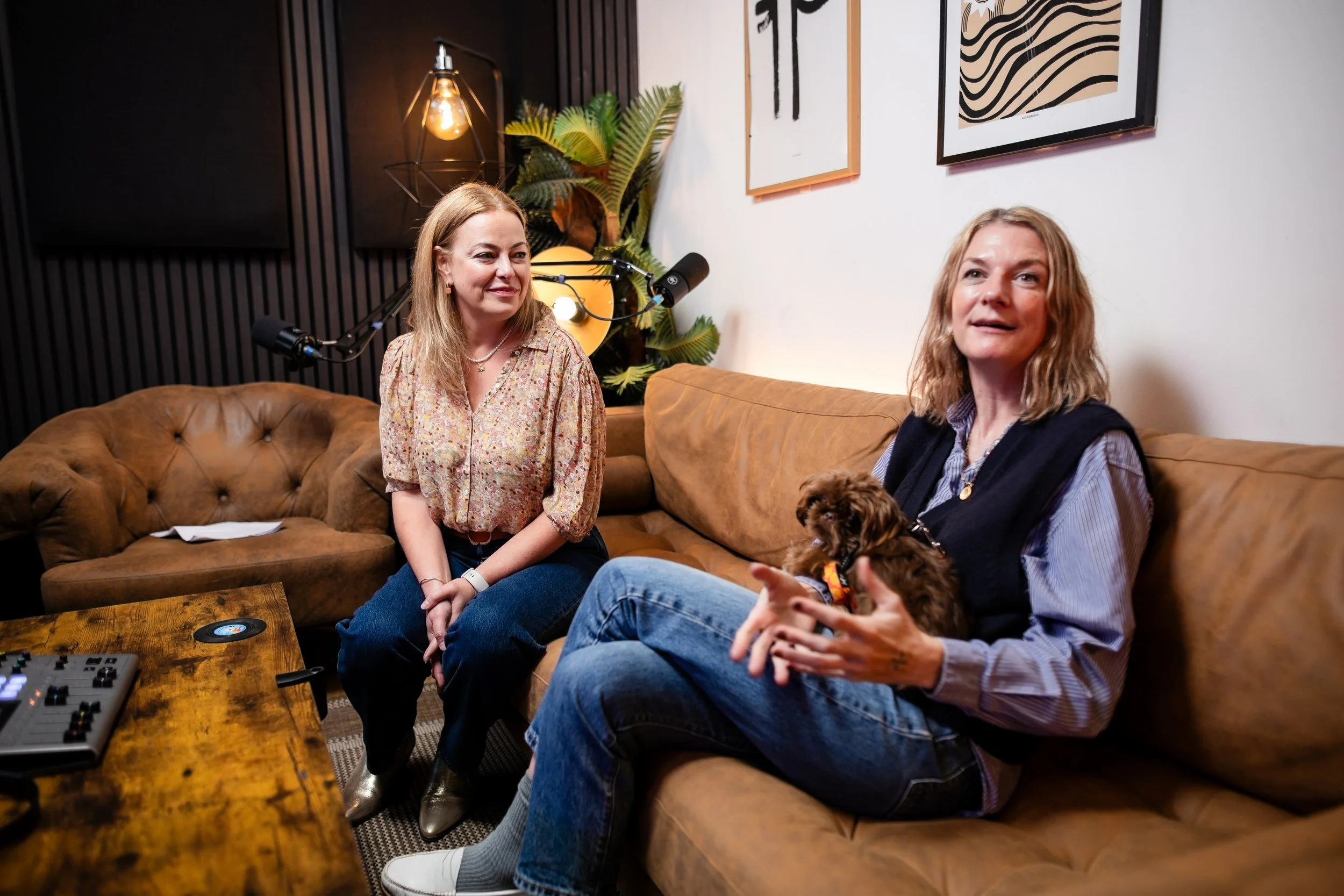
If you've been searching for Eliza Fricker, Missing the Mark or Can't Not Won't, this episode explains where her story begins. In the opening episode of This Voice Is Mine: The Unquiet Podcast, Dr Emma Offord sits down with author, illustrator and PDA/autism advocate Eliza Fricker to talk about what happens when life "goes nuclear" and the mask finally slips.
When school stops being safe
Eliza shares the story of her daughter's breakdown from school and the loneliness of being disbelieved as a mother. Emma and Eliza name what so many families live through but rarely have language for: school trauma, neurodivergent-specific trauma, and the thousands of small, accumulating hurts that never show up in a single incident report. For neurodivergent children and their parents, "school is safe" can be a dangerous myth.
How Missing the Mark began
Eliza's blog started as catharsis and became a lifeline. Drawing rooftops from a high-up flat, writing over baby photos, using wit to reclaim power when outrage emails were going nowhere - this is where her voice found its shape. She describes the early disbelief that anyone would relate, and the moment a psychologist sharing her work with her team told her otherwise.
Masking, fawning and the shame underneath
Both Emma and Eliza speak honestly about masking and fawning in institutional settings: the manic smiling in school meetings, the dissociation afterwards, the emails sent in the car park that confused everyone who'd only seen the compliance. Shame sits just under the mask, and this episode names it without flinching.
Neurodivergent-specific trauma
This is not one big event. It is hundreds, thousands, of small ones: being misunderstood in classrooms, fawning through meetings, being told you are too sensitive, too much, too rude. Emma names this explicitly as neurodivergent-specific trauma, and Eliza reflects on how somatic experiencing helped her give her shame a colour and a shape — oval and red, as it turned out.
The sensory assault of institutions
Strip lights, lanyards, plastic chairs, busy corridors. For neurodivergent people, these are not neutral backdrops. Eliza describes the physical experience of returning to school environments as a mother, reliving the distress of her own childhood while advocating for her daughter. Emma reflects on how the body holds what the head tries to override. The environment is not benign. The environment is the intervention.
Growing full size
Middle age, motherhood and becoming. Both Emma and Eliza explore what it means to "grow full size" as a late-identified neurodivergent woman: filling all the corners of who you really are, even the parts people preferred when you stayed small. It is brave, not convenient. It is expansion and contraction and the courage to keep going.
Building genuinely safe spaces
Eliza talks about the reciprocal safety she has found through her webinars, her one-to-ones with families, and the community that has gathered around her work. When one neurodivergent person speaks honestly, it opens the door for others to breathe again. These are not performances of safety. They are the real thing.
If you've ever come out of a school meeting smiling on the outside and shattered on the inside, felt like you must be the problem, or worried you're "making a fuss" - this conversation is for you. You are not alone, and your unquiet voice matters more than you think.
02:25: Daughter's breakdown and the beginning of drawing Eliza locates the exact moment everything changed: her daughter no longer able to be in school, sitting in a high flat drawing rooftops, deciding to just keep going.
08:22: Reliving old wounds in new environments
Eliza describes the physical and emotional experience of returning to school environments as a mother — strip lights, lanyards, plastic chairs — and the feelings of being misunderstood that came flooding back.
13:06: Fawning in meetings, dissociating on the way out
Eliza talks about manic smiling through school meetings to survive them, then coming out and remembering nothing. Emma names it as a survival response, not compliance.
19:09: Naming neurodivergent-specific trauma Emma introduces the concept explicitly: not one big event, but hundreds of thousands of small ones that accumulate over time. Eliza reflects on giving her shame a colour and a shape through somatic experiencing.
30:42: Being asked to edit her voice Eliza describes pulling out of a speaking engagement after being asked not to mention failing her maths GCSE. The moment the system tried to shut down the voice she had spent years finding.
44:15: Growing full size in midlife Emma and Eliza explore what it means to stop apologising for changing, for being, even when others preferred the smaller version.
What is neurodivergent-specific trauma? Neurodivergent-specific trauma is not usually caused by one single event. It builds from hundreds of small, accumulating experiences: being misunderstood in classrooms, masking in unsafe environments, being told you are too much, too sensitive, or too rude. It is the slow erosion of safety that comes from living in systems not built for your brain or body.
Why is school traumatic for some neurodivergent children? For many neurodivergent children, school environments are a sensory assault rather than a place of safety. Strip lighting, busy corridors, rigid hierarchies and unpredictable social dynamics can dysregulate the nervous system. When a child's behaviour is treated as the problem rather than the environment, the real cause of distress goes unaddressed and the trauma compounds.
What is masking and fawning, and how does it affect neurodivergent adults? Masking is the process of suppressing or hiding neurodivergent traits to fit in with social expectations. Fawning is a survival response - being overly agreeable and pleasant in situations that feel threatening. Both are exhausting and often invisible to others. Many late-identified neurodivergent adults spent years masking without knowing that's what they were doing.
What does "growing full size" mean for late-identified neurodivergent women? Growing full size means allowing yourself to occupy all of who you are, including the parts that were shaped, shrunk or silenced by years of masking. For many late-identified neurodivergent women, midlife is when this process begins in earnest. It is not easy or linear, and it is not always well received by those who preferred the smaller version.
Who is Eliza Fricker and what is Missing the Mark? Eliza Fricker is an author, illustrator and neurodivergent advocate. She writes and draws under the name Missing the Mark, exploring the experiences of neurodivergent families navigating the school system and beyond. Her book Can't Not Won't became a Sunday Times bestseller and has given language and images to thousands of parents and professionals across the UK.
How can neurodivergent parents find support when they feel unheard? Community matters. Spaces where parents can say the real, messy things out loud, without being handed a PowerPoint and four clip-art pictures, are rare and genuinely valuable. Eliza Fricker's webinars and Dr Emma Offord's work at Divergent Lives both aim to create those spaces: honest, reciprocal, and built on lived experience rather than tick-box solutions.