
When Everything Shifts at Once:
Hormones, Neurodivergence, and the Midlife Unmasking
with Sophie Cartledge
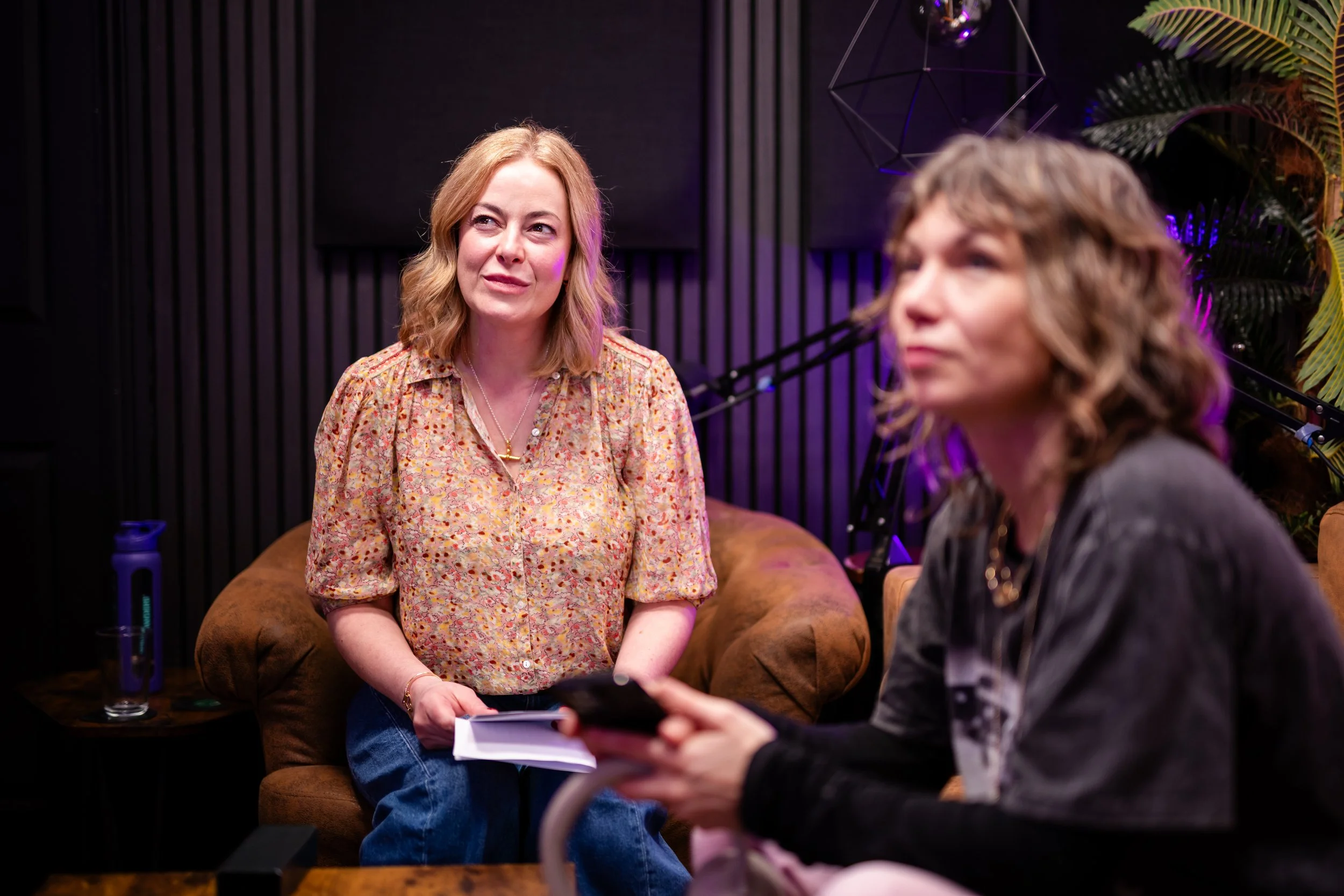
For many women, perimenopause and ADHD discovery arrive at almost exactly the same moment, and untangling which is which can feel impossible. In this episode, Dr Emma Offord is joined by Sophie Cartledge, founder of Hormones on the Blink, late-identified autistic and ADHD woman, mum of three, and one of the most important voices working at the intersection of hormone health and neurodivergence.
When Perimenopause Hits Like a Catastrophe
Sophie's perimenopause journey started at 40, and what followed felt, in her own words, like every catastrophe she could name. A career that no longer fit. Rage that came up from her feet. A nervous system she no longer recognised. And a medical system that repeatedly offered her antidepressants when what she needed was someone to join the dots.
Finding the Map: ADHD, Then Autism
Through her research into why so many women are being identified as neurodivergent during perimenopause, Sophie discovered her own ADHD, and then, within days, the profound and foundational piece underneath: that she was autistic too. She describes it as tectonic plates shifting back into alignment. As finally getting the map.
What Happens in the Body and the Brain
This is a conversation about what happens when oestrogen drops and the scaffolding shifts. About identity whiplash. About the difference between burnout and unmasking. About rage as information. About the lights on in houses across the country, all the women sitting up at 3am feeling like they are the only one.
What Becomes Possible on the Other Side
It is also a conversation about what becomes possible on the other side. The heart-led businesses. The reclaimed joy. The self that was locked away before secondary school, finally allowed back out.
Together They Explore
Why perimenopause so often acts as the catalyst for late neurodivergent identification, and the science behind why
The relationship between oestrogen, dopamine, and the neurodivergent nervous system
What identity whiplash actually feels like, and why the mental health signs of perimenopause are so consistently missed
How rage in perimenopause can be information rather than pathology
The experience of positive disintegration, when everything falls apart so it can be rebuilt more truly
The difference between burnout and unmasking, and why confusing the two can keep you stuck
Why the medical system keeps reaching for antidepressants, and what needs to change
What partners, families, and employers can actually do to help
How to get through the darkest moments, one five-minute window at a time
Sophie's message to every woman sitting up at 3am, light on, feeling completely alone
Connect with Sophie: @hormonesontheblink
This Voice Is Mine: The Unquiet Podcast is hosted by Dr Emma Offord, clinical psychologist and founder of Divergent Lives. For every neurodivergent mind that was masked, misread, or missed.
Time stamped episode moments
It's not my story" — the interview that started it all (~3:48–9:18) — Helen recounts the therapy training interview where she was told her guarded account of a loved one's mental health crisis "absolutely is your story," and the realisation that she'd never believed her own story mattered.
Self sufficiency isn't a strength, it's armour (~9:18–9:53) — Helen's first therapy session, insisting "I don't need anything," and being told "we're meant to need others."
Safe room, unsafe body (~12:09–13:41) — Helen and Emma on why an environment being safe doesn't mean your internal script believes it, and the real weight of vulnerability work.
The mashed banana moment (~37:30–39:20) — Emma's story of self disclosing a sensory sensitivity to a client, and why small, human admissions can do more than psychological formulation.
The bird cage and the Jack in the Box (~45:16–46:55) — Jolene and Helen's images for what it feels like to stay small for others, and why once your voice is heard, "there's no squeezing you back."
Growing full size: closing reflections (~50:39–52:21) — Jo, Jolene, and Helen each leave listeners with a practice for finding voice, from journaling to a hand on the heart.
Q: What does it mean to say vulnerability is "nervous system work," not just emotional work?
Vulnerability isn't only about choosing to open up. Your nervous system has to believe it's safe first, based on lived experience, not just the safety of the room you're in. That's why "just be vulnerable" often isn't enough, even in genuinely safe spaces.
Q: Why do so many women struggle to ask for help, even when they need it?
Many of us were praised for being self sufficient and needing nothing, so asking for support can feel like failure rather than a normal human need. Unlearning this often starts with recognising it as conditioning, not a personality trait.
Q: What is "good girl" conditioning and how does it relate to people pleasing?
It's the pattern of learning, often early in life, that being agreeable, undemanding, and easy to manage keeps you safe and accepted. Over time it can shape how comfortable someone feels taking up space, setting boundaries, or having needs of their own.
Q: Should therapists and professionals ever self disclose personal experiences?
There's no single right answer, but this episode explores how small, careful moments of shared humanity, rather than deep personal disclosure, can help someone feel less alone in their shame. It's about discernment, not a fixed rule.
Q: What does "growing full size" mean?
It's the idea of taking up your full, authentic space rather than staying small to keep others comfortable. It's not a performance of confidence. It's a nervous-system-led process, and it can be uncomfortable for you and for people around you who preferred the smaller version.
Q: How do you start finding your voice if speaking up feels too big right now?
Start small. Whispering your voice to yourself in a journal or with a trusted friend counts. Voice doesn't have to arrive fully formed to be real.