
Choosing him every time
Choosing Him Every Time: Autistic Burnout, School Trauma and a Life Without School, with Linsey Biggs
Unschooling ADHD Children: Home Education in the UK with Linsey Biggs
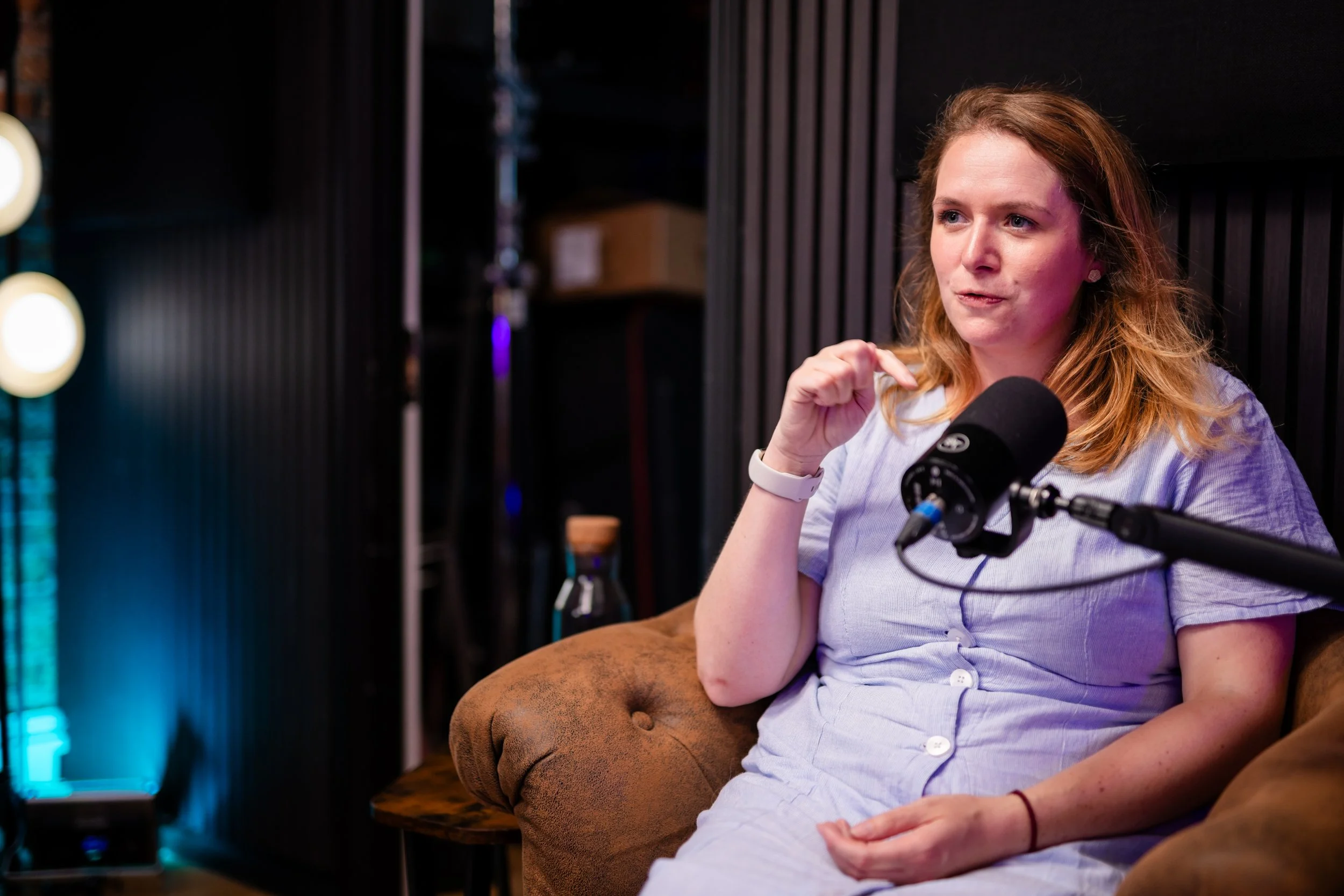
What happens when your child’s crisis becomes the doorway to understanding your own? In this episode, Dr Emma Offord is joined by Linsey Biggs, full-time parent carer to three children and the voice behind Unschooling Stanley. Unschooling ADHD children and other neurodivergent kids means stepping outside the mainstream education system entirely—and for Linsey’s family, it was survival, not a plan. After eight years of building a life without school, Linsey shares what it actually takes to unlearn the belief that children need to be shaped, managed, and made ready for adulthood.
The slow build to crisis point
Linsey’s eldest son Stan showed signs of distress from three years old, refusing preschool and struggling with transitions long before school became impossible. By the time he entered reception, the anxiety had built into something unbearable: he wouldn’t eat, wouldn’t sleep, and lost the ability to play or find joy in anything. The year leading up to taking him out of school was not just emotionally devastating for Stan—it was physically unwell, marked by repeated illness, fatigue, and a child who looked, as Linsey describes it, like he had no life left in him.
Why “he’s fine once you’re not there” is so damaging
Teachers kept telling Linsey that Stan was “fine” at school, that his anxiety was only triggered by her presence, that once she left, he settled. This narrative is one of the most harmful things a parent can be told, because it invalidates both the child’s experience and the parent’s witnessing. Linsey now knows—and Stan has confirmed—that adults in the school were lying, whether intentionally or through misunderstanding. The message to parents is clear: if you’re seeing distress, you’re the problem, not the system.
Recognising her own ADHD and school trauma through her son
As Stan struggled, Linsey began to recognise patterns in herself she’d never understood. She too had been a school refuser, a child who couldn’t concentrate, who was labelled a rebel for not conforming. She came out of school with qualifications, but she doesn’t believe any of that came from school itself, it came despite it. Through Stan’s journey, she finally had language for her own experience: ADHD, school trauma, neurodivergence. What she’d survived as a child, she could not allow her son to endure.
The wobbles that come with stepping outside the system
Taking Stan out of school wasn’t a confident decision made from a place of certainty. It was survival. Linsey speaks openly about the wobbles - the months of doubt, the judgment from those around her, the fear that she was making a catastrophic mistake. These wobbles come thick and fast when you step outside what everyone has been taught to trust. But holding onto her “why”- protecting her child—kept her steady through the uncertainty. Even now, years in, she acknowledges that this path requires constant trust in something that looks radical to everyone else.
Why school trauma isn’t recognised in the DSM
School trauma is not listed in the Diagnostic and Statistical Manual, which means it’s not officially diagnosable. But trauma is, and trauma can happen anywhere - including in spaces society tells us are the safest places for children. This gap in language means families describing their child’s experience of school as traumatic are often met with denial or minimisation. The system insists the child will be fine, even as the child tells their parent they want to die. For Linsey and Emma both, raising this voice has become essential advocacy work.
The knock-on impact on the whole family
The stress of trying to make school work affected not just Stan, but Linsey’s marriage, her youngest child’s nervous system, and her own mental health. Linsey was dysregulated, depressed, anxious, and felt like she was failing at everything. When you’re holding a child in crisis while also holding yourself together, the impact ripples through every relationship and every part of family life. It wasn’t just Stan who needed recovery—it was the whole family system that had been thrown into survival mode.
Moving from school at home to true unschooling
Linsey’s first instinct was to replicate school at home: structure, curriculum, lessons. But she quickly learned that what her children needed was something entirely different. Unschooling ADHD children, in particular, means honouring their need for autonomy, self-directed learning, and trust in their own curiosity. Her middle son, who has never been to school, learns through sport, through play, through the things that bring him life. Her youngest thrives without any formal schooling. The shift from “school at home” to true unschooling was the shift from control to trust.
What she’d say to a parent standing where she once stood
To parents watching their child fall apart at school, Linsey’s message is this: believe your child. Believe what you’re witnessing, even if the school tells you it’s normal, even if people around you say you’re overreacting. If your child is truly struggling - not just a little bit, but showing signs of trauma, dysregulation, loss of self - then nurturing them to be well, truly well, is more important than any academic outcome. Your child already knows themselves better than any system can teach them. Your job is to protect that, not to reshape it.
Linsey’s voice is honest, unpolished and full of love. She doesn’t offer a formula. She offers proof that a different way is possible, and that the wobbles are worth holding through.
Follow Linsey on Instagram: @unschoolingstanley.
Time stamped episode moments
12:00: “He was absolutely not fine”
The turning point: Linsey challenges the narrative that Stan was fine at school, and describes what was really happening at home.13:30: Stan’s crisis at school: refusing food, sleep, and losing joy The visceral description of what autistic burnout and school trauma actually looks like in a young child, including the physical toll.
23:00: Recognising her own ADHD through her son
The moment the pattern clicks: Linsey sees herself in Stan’s school refusal and realises her own undiagnosed neurodivergence shaped her entire childhood.20:30: School trauma isn’t in the DSM, but it’s real
Emma and Linsey discuss why trauma in school environments isn’t officially recognised as a diagnosis, and what that means for families.26:00: “What on earth have I done?” Linsey describes the moment of taking him out of school, the terror and grief of the decision, and the isolation of being a mum in crisis.
48:00: The philosophy of trusting children: “They show me the way all the time” Linsey’s closing philosophy on unschooling, autonomy, and why neurodivergent children already know what they need—we just have to get out of the way.
What are the signs of autistic burnout in children?
Autistic burnout in children often looks like increasing school refusal, food and sleep disruption, loss of ability to play or find joy, and escalating anxiety or meltdowns. Physical symptoms can also appear - repeated illness, exhaustion, or looking visibly unwell. If your child is showing these patterns and they’re getting worse, not better, it’s worth taking seriously.
What does school trauma actually mean?
School trauma happens when a child’s nervous system experiences a school environment as unsafe or threatening, leading to lasting distress that affects their ability to function at school and often at home too. It’s real and measurable in a child’s body and behaviour, even though it’s not officially listed in diagnostic manuals. Recovery from school trauma takes time and usually requires stepping away from the triggering environment.
Can a parent recognise their own ADHD or autism through their child’s diagnosis?
Yes, absolutely. Many parents discover their own neurodivergence only after their child is diagnosed, because they begin to recognise patterns they’ve lived with their whole life but never had language for. Seeing your child struggle with the same things you struggled with can be the moment everything clicks into place about your own experience.
Is it legal to home educate or unschool in the UK if your child hasn’t been to school?
Home education is legal in England and Wales and doesn’t require permission from the local authority if your child has never been enrolled in school. However, the rules vary slightly between regions and there are responsibilities around ensuring suitable full-time education. It’s worth checking your local authority’s guidance and connecting with home education groups in your area for practical support.
How do you know if your child really needs to leave school versus just needing adjustments?
The difference is often about scale and recovery. If your child is dysregulated at school but recovers reasonably quickly at home, adjustments might help. But if they’re showing signs of trauma, lose the ability to eat or sleep, express self-hatred, or take hours to regulate after school, the environment itself may be fundamentally harmful. Trust what you’re witnessing in your child’s body and mental health, not what the school tells you about how they behave when you’re not there.
What does unschooling actually look like day-to-day?
Unschooling means following your child’s interests and natural curiosity rather than a set curriculum. A day might look like learning maths through sport or games, reading through things that genuinely interest them, and building life skills through daily life rather than lessons. It requires trust that children are capable of directing their own learning and a willingness to step away from traditional markers of progress.