
Internal Realities
Tuning Into Your Neurodivergent Body
with Dr Clare Jacobson
Internal Realities: Tuning Into Your Neurodivergent Body with Dr Clare Jacobson
Late diagnosis neurodivergent body signs often show up long before anyone has language for them. A racing startle response. A body that never quite knows where it is in space. A sense of taking in more of the world than everyone else seems to. For Dr Clare Jacobson, a Specialist Clinical Psychologist with over 20 years of experience, these signs were there for decades before her own neurodivergent identification gave her the words to name them.
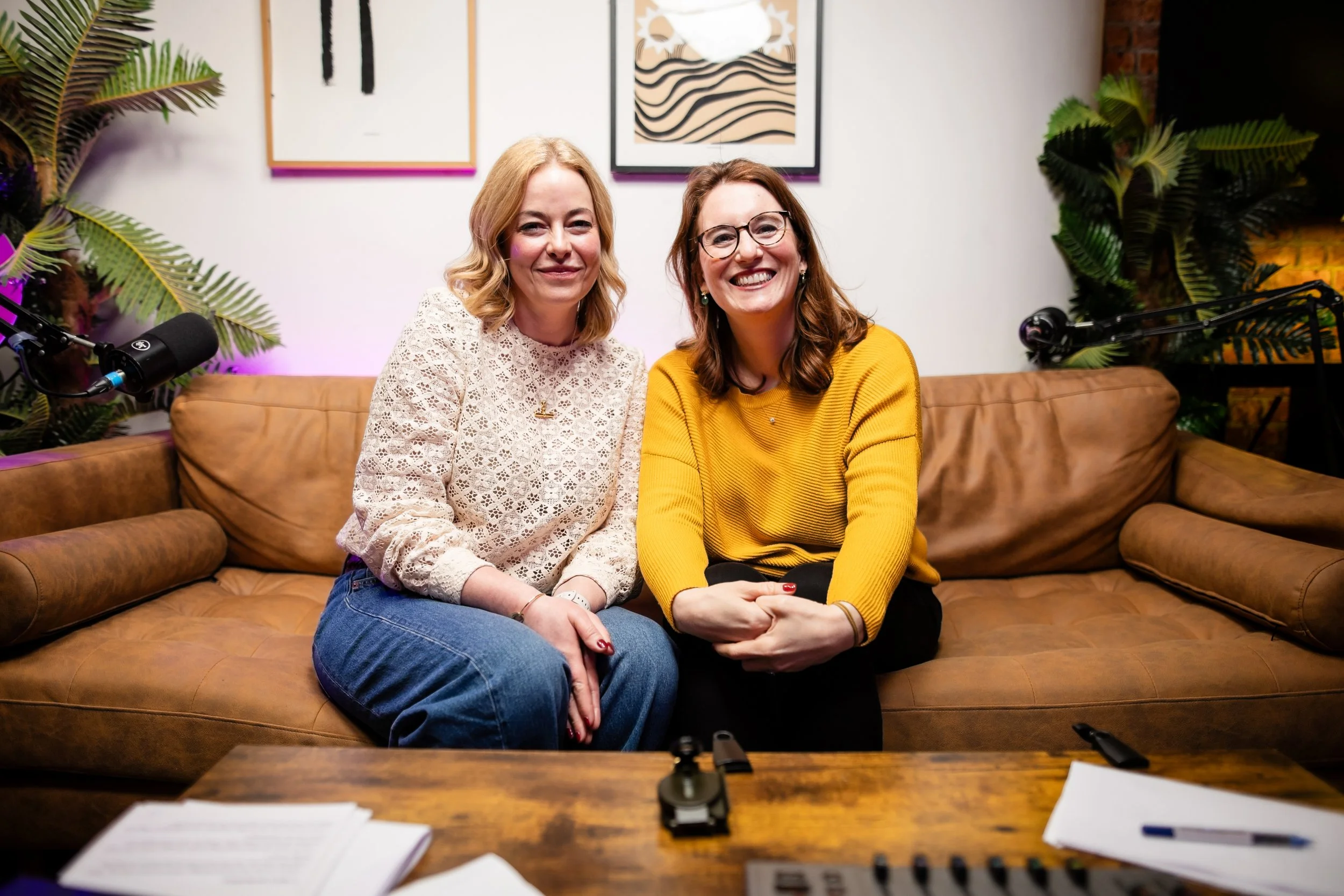
In this episode, Dr Emma Offord is joined by Clare, who established and continues to lead an award-winning NHS Teenage and Young Adult Cancer Psychology Service. Over the past year, Clare has been navigating her own neurodivergent identification, a journey that has opened up a profound reckoning with embodied experience, internal realities, and what it means to finally have language for things she had always felt but never been able to name. Clare brings a rare dual lens to this conversation: a clinician who holds the stories of hundreds of patients, and a late-identified neurodivergent person who spent decades suppressing the parts of herself that didn't fit the dominant script.
Diagnosis Is a Clue, Not the Whole Story
Clare treats psychiatric diagnosis as one lens on a person's experience, never the whole picture. She describes it as "a clue to the story underneath," useful for naming patterns but never a substitute for the fuller, messier truth of a life. Approaching someone's inner world with curiosity, rather than certainty, is what she says makes the difference.
The Secret Garden of Trust
Clare calls the therapeutic relationship a "secret garden", a private, intimate inner world that a client invites you into at their own pace. Trust has to be earned, not assumed, and once inside, the work is to go carefully: noticing what's a weed and what's a flower, and letting the person show you what they're ready to show you.
Clare's Own Neurodivergent Identification
Clare's own journey began with what she calls bombshell revelations after each of her pregnancies, moments where her brain seemed to stop protecting her from linking the dots. After her third child, it landed fully: her son was neurodivergent, and so was she. Three years of research followed, and she and her son received their diagnoses within months of each other.
The Hunter and the Farmer
Clare uses the hunter-farmer analogy to explain why ADHD can feel like a mismatch rather than a deficit. A hunter needs to be impulsive, alert, and quick to follow instinct. A farmer needs consistency, patience, and attention to detail. Both are valuable. A hunter raised in a farming village will always feel othered, not because anything is wrong with them, but because the context doesn't fit.
Playing the Card Game by Your Own Rules
Clare's card game metaphor reframes what looks like unreliability as a different kind of care. She may not send a birthday card on the exact right day, but she'll send one out of the blue on a random Tuesday that says more than a timely one ever could. Letting people play by their own rules, she says, can be a deeper form of love than forcing everyone into the same script.
The Call Isn't Coming from Inside the House
Late identification, Clare says, gives language to experiences that were always there but never named. The harsh inner critic so many late-identified adults carry isn't really their own voice. It's internalised, built from years of being an undiagnosed neurodivergent child, teenager, and young adult in a neurotypical world with no language for what they were experiencing.
The Neurodivergent Body: Hypermobility, Proprioception and Inflammation
This is where the late diagnosis neurodivergent body signs become most concrete. Clare describes proprioception, the sense of knowing where your body is in space, and how getting it wrong (bumping into furniture, catching a sleeve on a door handle) keeps the nervous system on extra alert. She talks about interoception, not registering hunger or the need for the toilet until the signal is shouting, and about the extra inflammation and fatigue that so often accompanies a hypermobile, neurodivergent body. None of it shows up neatly on a scan. All of it is real.
Receiving Extra Data
Clare describes neurodivergent perception as receiving extra data that neurotypical people simply filter out. That might mean picking up someone's hidden hostility as a physical force, or feeling a nervous-system-to-nervous-system connection with another person before either of you says a word. Clare goes further still, describing a theory of collective consciousness she calls "the original Internet", one possible explanation for why so many neurodivergent people describe a kind of knowing that defies straightforward explanation.
Authenticity, from Beginning to End
Clare draws a line between the authenticity of small children, who are simply themselves before the world teaches them otherwise, and the authenticity she has witnessed at the end of life, when people finally stop performing for anyone. Somewhere in between, she says, most of us get hooked by other people's scripts. Her own diagnosis has been a way back to that early, unguarded self.
Keeping the Compass Pointing North
Clare closes the conversation with the object she brought to represent grounding: her son's compass. As a child, her own compass needle spun without settling, and she learned to override her gut with her head. Now, she teaches her own children something different: your body knows. Tune in.
This Voice Is Mine: The Unquiet Podcast is hosted by Dr Emma Offord, clinical psychologist and founder of Divergent Lives. For every neurodivergent mind that was masked, misread, or missed.
Time stamped episode moments
06:54: Diagnosis as "a clue to the story," not the whole story
11:33: The hunter-farmer analogy for ADHD
22:49: "It's not coming from inside the house": reframing the inner critic
29:19: The neurodivergent body: proprioception, hypermobility and interoception
54:12: Quantum consciousness and "the original Internet" theory
1:01:06: The compass: keeping your needle pointing north
What are the physical signs of undiagnosed neurodivergence in adults?
Many late-identified neurodivergent adults notice physical patterns before they ever consider a diagnosis. These can include proprioception differences (bumping into furniture, feeling clumsy), interoception differences (not noticing hunger or needing the toilet until it's urgent), heightened startle responses, and hypermobility. None of these show up on a blood test, but they are a real and common part of the neurodivergent experience.
Why are so many hypermobile people also neurodivergent?
There's a well-documented overlap between hypermobility and neurodivergence, particularly ADHD and autism. Some research suggests around half of people with ADHD are hypermobile, and the figure may be even higher for women. The connective tissue differences involved can also affect proprioception, inflammation and fatigue, which is why many late-identified adults recognise these traits retrospectively.
What is the hunter-farmer theory of ADHD?
The hunter-farmer analogy frames ADHD traits like impulsivity, alertness and quick instinct as suited to a "hunter" role, while more typical traits like consistency and attention to detail suit a "farmer" role. Both are valuable, but a hunter raised in a farming village will always feel othered, not because anything is wrong with them, but because the environment doesn't fit their wiring.
Why do late-diagnosed neurodivergent people often have a harsh inner critic?
That inner critic usually isn't a true reflection of the person. It develops from years of being an undiagnosed neurodivergent child, teenager or young adult in a neurotypical world with no language for their experience. Once someone has a name for what they're experiencing, they often find more freedom and flexibility in how they relate to that self-critical voice.
What does it mean to receive "extra sensory data" as a neurodivergent person?
Some neurodivergent people describe picking up more sensory and emotional information than the people around them, and struggling to filter it out. This can include noticing subtle shifts in someone's mood or energy, strong reactions to smell or sound, or a sense of connecting to another person's nervous system before either of you has spoken. It isn't a flaw. It's a different way of processing the world.
Does getting a late diagnosis actually change anything?
For many people, yes. Having language for invisible experiences can bring real relief, even without changing the experiences themselves. It offers a way to understand long-standing patterns with more curiosity and less shame, and it often becomes a starting point for reconnecting with a more authentic version of yourself.