
Riding the Tornado
ADHD, Skateboarding, and the
Power of Finding Your Thing with Ryan Swain
Riding the Tornado: ADHD, Skateboarding, and the Power of Finding Your Thing with Ryan Swain
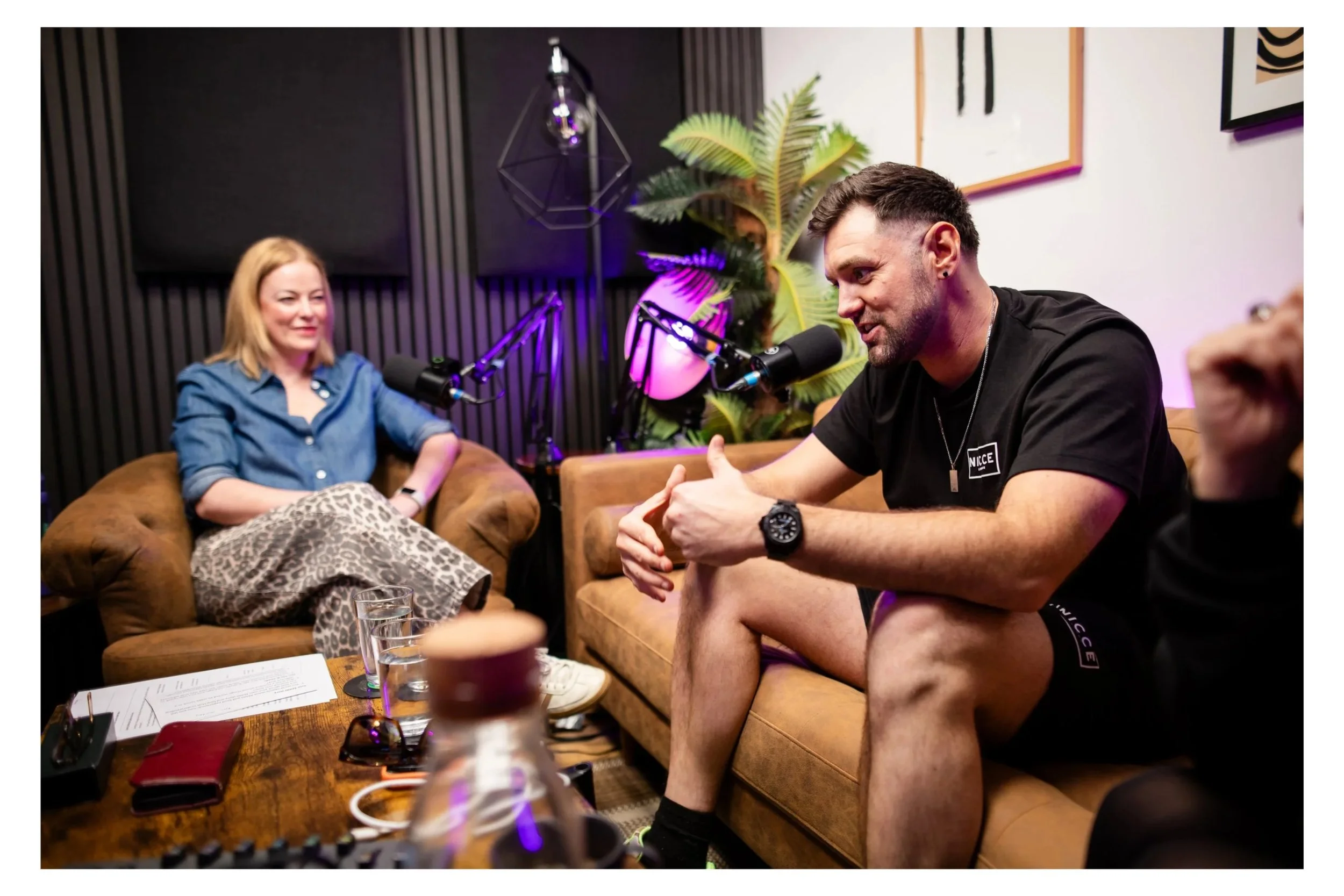
When it comes to ADHD, the wrong environment isn't a minor inconvenience. It's the difference between a child being supported and a child being written off. In this episode, Dr Emma Offord is joined by Ryan Swain: award-winning presenter, performer, skateboard coach, and founder of the You, Me & ADHD awareness campaign.
Ryan's story begins in North Yorkshire, where from the earliest age his ADHD was visible, relentless, and entirely unsupported. From a heart condition undetected for three and a half years, to school reports that catalogued his differences as deficits, to being denied the GCSE subjects he actually loved because teachers labelled him a liability, Ryan spent his childhood and adolescence in survival mode. Nobody questioned why he was the way he was. They just kept telling him it was wrong.
What he found at the age of eleven changed everything. Skateboarding gave Ryan something no classroom ever had: a place where his neurobiology made sense. It became his sanctuary, his teacher, and his passport into creativity, culture, and community.
Growing Up Unsupported
Ryan shares what it felt like to grow up with boundless energy, goodwill, and enthusiasm, and be consistently written off, sidelined, and told to be less. He also opens up about his early childhood, including a life-threatening heart condition that went undetected for years because his ADHD presentation masked the physical signs.
The Social Cost of Not Fitting In
Rejection sensitivity, the exhaustion of trying to read a room, and the weight of spaces that were never designed for people like him: Ryan speaks honestly about the social toll of growing up without context or support. The impact of those years didn't disappear. It shaped everything that came after.
The Tornado Analogy
Ryan introduces one of the most clarifying frameworks for ADHD you will hear. ADHD is a tornado: in the wrong environment it causes chaos, pulls everyone in, and causes real damage. But in the right environment, that same force generates surplus energy. It can save lives. The question was never how to fix the person. It was always about finding them the right environment.
How Skateboarding Changed Everything
Skateboarding became Ryan's classroom, his regulation tool, and his community. The speed, the risk, the discipline, the need for absolute presence or you fall and fall hard: it was the first space that made sense of who he was. He didn't fight his ADHD. He rode it. And that distinction, Ryan explains, is everything.
Taking Lived Experience into Schools
Ryan now brings his story into schools, colleges, and communities through the You, Me & ADHD campaign. He talks about what happens when neurodivergent young people hear their own story reflected back through someone else's voice, the quality of attention in the room, and the questions that follow. It is the kind of advocacy that no policy document can replicate.
Why Self-Acceptance Matters Now
While the fight for systemic change continues, Ryan makes a point worth sitting with: self-acceptance and self-awareness can do more than we think. Talking about what you're going through, finding even one person or space that holds it with you, these aren't small things. They are some of the most powerful tools available right now.
If you've ever been told your energy was too much, your focus was wrong, or your way of doing things didn't count, this one is for you. Ryan's story is proof that the right environment doesn't just help us cope. It lets us come alive.
-
Emma: Hi. I'm Dr Emma Offord, host of This Voice Is Mine: The Unquiet Podcast. For every neurodivergent mind that was masked, misread, or missed. Where identity is reclaimed and the system gets named.
This podcast is for those who were told they were too much, too sensitive, too chaotic, too intense, or not enough. Through stories, reflections, and conversations with people who were never meant to fit, This Voice Is Mine reclaims the truth of neurodivergent minds, bodies, and ways of being. This is not about fixing or fitting in. It's about remembering who we are, and unlearning everything they got wrong.
Today I'm joined by Ryan Swain. Ryan is an award-winning presenter, performer, skateboard coach, and neurodiversity advocate from North Yorkshire. He is the founder of the You, Me & ADHD awareness campaign, where he delivers talks and workshops across schools, colleges, and communities to challenge misconceptions about ADHD and neurodivergence through lived experience.
Alongside his advocacy work, Ryan runs Rydale Skate School, using skateboarding as a tool to build confidence, resilience, and community among young people. Through performance, education, and honest conversation, Ryan is helping people see ADHD differently. Ryan, it is so lovely to have you here.
Ryan: Thank you very much for having me. I'm very excited to share my story and talk about ADHD.
Emma: For listeners who perhaps don't know you or your work, where would you like to start?
Ryan: It's such a difficult thing, because I do so many different things. But basically, I'm just a big ball of good energy that likes to do creative things and help other people. Any way I can do that through expression and lived experience of ADHD, I'm always going to step up and advocate for those who maybe haven't got a voice. And I think that's what this podcast is all about.
Emma: Raising voices. Myself and the guests who've joined this podcast haven't always had a voice. We find ourselves at this point in life where maybe people are listening, or we feel able to share. But that wasn't always the case. Maybe that's where we could start.
Ryan: I was born in North Yorkshire, from a very humble, working-class background. My mum is an incredibly creative person, one of my biggest role models. She can make anything out of anything, innovative and always ahead of the game creatively. She's taught me everything I know about that.
But yes, we haven't always had a voice. I haven't always had a voice. In the last few years, people have opened their minds and become more educated. There are more resources around neurodivergence. Before that, it was: you're naughty, you're lazy, you're bad, you're disruptive, you're impulsive. All these derogatory labels thrown at you because nobody really wanted to understand. It was easier to write people off than to try to comprehend them.
Emma: So those were the narratives you had.
Ryan: Absolutely. And far worse than that. Stupid, idiot. From teachers, from pupils, from coaches. I never really blended in, especially at after-school clubs or team activities. It was hard growing up, because I had so much enthusiasm and I wanted to be involved. I wanted to fit in. I wanted to be accepted. I think that's such an ADHD trait: to want to do everything, but then feel pushed aside when the world doesn't want you involved.
And obviously we talk about rejection sensitivity now. Back then none of that was heard of. I couldn't comprehend the way I felt. I always felt pushed aside rather than embraced for who I was.
Emma: So your experience growing up was very much having an abundance of energy, goodwill energy, wanting to put it to good use creatively, and that being shut down, judged, pushed away. And you spoke about rejection sensitivity. When you are being rejected, you're going to feel it.
Ryan: When I do my talks and workshops, I try to make people understand ADHD through my own experience. It doesn't matter how hard you try, people will always expect more, or expect you to try harder. Even when you're drowning, even when you're doing everything you can, it's never enough.
That's something I experienced from a young age. Whenever you mention ADHD, people shrug it off, or say it's just an excuse for being naughty or lazy. It's a neurobiological condition. It affects everybody differently, but a lot of the experiences are the same.
Emma: When you were younger, had you been diagnosed?
Ryan: Great question. So when I was born, I was born with a patent arterial ductus. That's a heart defect, an open valve that should close at birth. It's usually picked up within the first six months. For some unknown reason, nobody picked mine up. I went three and a half years without it being detected.
During those three years, I didn't present as a sick child. I presented as a Duracell bunny. Very impulsive, always distracted, couldn't concentrate, couldn't focus, couldn't listen, really struggled following instructions. My mum knew I was slightly different. She'd heard of ADHD and started researching it, looking at how it presents in children.
She started speaking to people about it, and was dismissed. Called a neurotic parent, over-dramatising, overreacting. But I really struggled. Couldn't sit still, always talking, couldn't sleep, very restless. Meanwhile, inside, my body was shutting down. My vital organs were packing in. And nobody picked up on that.
This is what I always say: how ADHD presents on paper and how it presents in someone's life are two completely different things. My undiagnosed ADHD was doing things on the outside, while internally everything was going wrong.
Emma: Do you remember that time?
Ryan: Yes, I do. I was into everything I could get my hands on. I can understand now, looking back, how my behaviour was perceived as destructive, even though I never intended it to be. I'd pick things up constantly, fidget, always have something in my hand. There were no fidget toys back then, just pens, pencils, bendy rulers. I used to break things all the time, very clumsily. Not intentionally. I was just hyper-focused on something else and didn't realise what my body was doing.
Emma: That's an important point. The nervous system drive, the natural drive to keep going, even when your body is shutting down. Of course ADHD is going to mask what's happening internally. It shows how an ADHD brain cannot stop its drive, even under those conditions.
Ryan: Absolutely. My heart was putting excess pressure on all my major arteries, and that's what a patent arterial ductus does eventually. It just implodes. It got to the point of burnout, and I collapsed. That's how far it came.
I always look at this metaphorically. We look at the exterior of a house and assume we know what's inside. ADHD is the same. Just because you can't see it doesn't mean it's not there. It was there for me, presenting itself. But nobody saw it. And nobody saw the other issue either. My heart.
So I collapsed, and I was told I had weeks to live. I had a major heart operation at age four. It changed my life. It gave me a zest for living, because not everybody gets a second chance. From that moment, I promised myself that no matter what I do, I'd always give it 110%. Because not everyone gets that second go.
Emma: That's a beautiful thread that runs through you. That anchor point of a second chance at living. But I know part of your story wasn't smooth sailing after that.
Ryan: Not at all. I healed very quickly and bounced back. Didn't rest, should have been resting, wanted to be outside playing football, chasing the ice cream van.
My journey with the education system was not smooth, and I want to put this out there: I don't hold resentment towards anybody. That was then, this is now. I wouldn't be doing what I'm doing in schools today if I felt that way. But it impacted my life hugely.
I feel like I've had to teach myself everything, because nobody would take the time to understand me. You get to a point where you think, just do it for yourself. Find whatever you need to survive. And that's what I did. I've always been in survival mode, right from the get go.
Report after report from reception through to Year 6 said the same things. Loud. Boisterous. Doesn't sit still. Disruptive. Sets tasks and never completes them. Sits and daydreams. Blurts out the answers instead of putting his hand up. And it wasn't a one-off. It recurred, year in, year out.
I've still got those reports. Mum kept them all. They're an interesting read. "Ants in his pants." "Always talking to somebody when he shouldn't be." And it wasn't just teachers. I felt other parents judging me too. "Oh, you sit next to Ryan, it'll distract you." Nobody tried to understand why I was doing those things.
There was something else as well. I was very athletic, always loved sport. When I started playing football, I always got put in goal, because nobody wanted to deal with my energy on the field. I was all over the place, which in football is actually quite useful. But I was seen as a loose cannon, so they put me in a box and told me to stay on my line.
I found that incredibly difficult. I'd stand in goal telling myself I was going to give it 110%, picturing myself lifting the trophy, having these big blockbuster daydreams. Then the whistle would blow, and an aeroplane would fly over the pitch, and I'd be staring at it thinking about holidays, and suddenly I was one nil down. Then two nil. Then three.
Kids got frustrated. Coaches got frustrated. Teachers got frustrated. And that frustration was directed inward, at me. I felt like I didn't fit in anywhere, and I went into adolescence and later adulthood feeling exactly the same way.
Emma: Hard to hear that nobody wanted you for your natural energy.
Ryan: Looking back, I don't think I've ever sat and judged anyone else. I've never told anyone to be anything other than their true self. But they seemed to have those expectations over me. That's what society can be, and it has caused me nothing but problems from the get go.
Emma: We could say society caused your ADHD nothing but problems.
Ryan: I don't like to blame other people. I'm very self-aware, and I've done a lot of self-reflecting over the years to get to where I am. But yes, sports didn't work. The classroom didn't work.
And then there was the pressure of SATs. I remember going into that room feeling like an alien. Your own desk, can't look at anyone, can't talk to anyone. Giant clock at the front of the room. Radio silence. I'd sit staring at that clock, hyped up, telling myself I can do this. Does it ever present like that? No. You get lost in the clock, and before you know it there are ten minutes left and you're scrambling.
I've never sat in an exam room when I go into schools now without thinking about that. The clock is still there.
And when it came to choosing my GCSE options, the subjects I actually loved, I was denied them. No teacher would have me. "Ryan's distractive. He doesn't take it seriously. He's a liability." That's the word they used.
At that moment, all I wanted was to show people what I was capable of. But nobody would give me the chance. I was screaming for help, and nobody was listening.
Emma: I hear so much optimism in how you tell this. Even through every setback, you're saying: I'm going to try harder. I'm going to choose these subjects. Putting yourself out there, vulnerably, each time it gets shut down.
Ryan: Yes. And I think only in my mid-thirties did I really start to understand that searching for validation from outside will only hurt you. None of those things were going to come from the system. So what I tell young people now is: you've got to find your thing. Try hundreds of different things, but you need to find that one thing.
For me, that thing was skateboarding. And skateboarding saved my life.
Emma: Tell me about that.
Ryan: First, I'll say this: I never fought my ADHD. I rode my ADHD. Skateboarding taught me that.
It taught me how to get knocked down and get back up again. It gave me discipline. If you don't look where you're going, if you don't concentrate, you crash, and you could hurt somebody else. So it taught me to focus in a way nothing else ever had.
It was also a passport to art, music, culture, and meeting people from all over the world. It taught me more than any teacher ever did. It was my classroom of life. My shelter and my sanctuary, the one place where nobody else would accommodate who I really was.
I got a skateboard at eleven for Christmas. Was rubbish at it for the first year, and then became completely hyper-focused. I loved the speed, the danger, the discipline. If you got distracted, you fell, and you fell hard. I've had about ten broken bones and dislocations. But it gave me lessons I couldn't get anywhere else. And it introduced me to all different cultures, creeds, races, people. Skateboarding is a culture, not just a sport.
Emma: This is what I see so much. There's a sweet spot where people find a career, a sport, a community, something that really nurtures and scaffolds and appeals to so much of their neurobiology. Rather than them having to fight to be in it. That's where you flourish.
Ryan: I came alive when I started skateboarding. Got that zest for life again. Started feeling my own emotions, started channelling what I'd been carrying into action and movement. The results were dumbfounding. I was doing things I didn't know I was capable of.
Emma: And finally getting that acknowledged.
Ryan: Well, skateboarding wasn't seen as very cool back then. It was very underground for a long time. It's only really in the last ten years that it's gone mainstream, partly because it became an Olympic sport. Many years ago you'd get made to feel weird for it. But it was always a creative space. Very much a neurodivergent sport, yes.
Emma: And you've taken all of that into the classroom.
Ryan: So this is what I teach, what I preach, and what I talk to families and young people about. I use an analogy. ADHD is a tornado.
I ask people: what does a tornado do? They say: it causes damage, chaos, it sucks everyone in around it. And yes, in the wrong environment, that's what ADHD can look like. But in the right environment, it generates surplus power. It can save lives.
It has to be dealt with in the right environment. If a neurodivergent person, diagnosed or undiagnosed, is in the wrong environment, it is going to cause problems. We have to be real about that.
Emma: Tell me more about what happens when you take that message into schools. I'm imagining those rooms, hearing your story, hearing that tornado analogy.
Ryan: I'm always startled by the response. Teachers will sometimes warn me: this is going to be a tough crowd. And then I start, and the neurodivergent young people who are supposedly not going to engage, they're the most attentive people in the room.
They're engaged because they want to learn about themselves. When they see someone else speaking openly about their experience, something shifts. And I just wish that people like us had had someone like that when we were younger.
That's why it's so important we do this now. Our voice gives them voice.
Emma: Absolutely.
Ryan: We're in 2026. We don't need all the stigma and misinformation carrying forward. Something needs to change. The system is broken. People vent their frustrations at teaching assistants and teachers, but it's not really their fault. It's the system that needs to change. And the more people speak out, eventually they'll have to listen.
Emma: I couldn't agree more. And I know you need to head off, so we'll wrap up, but we'd love to have you back. One last question, the one I ask all my guests. When you hear the phrase "This Voice Is Mine," what does that mean to you?
Ryan: It's about empowering people through the power of your voice. Not just your voice, but what you feel inside, and being allowed the time and the opportunity to express that. In a time when so many of us are under pressure, it's a free and powerful way to be your true, authentic self, and hopefully resonate with others like you. I'm fully behind it.
Emma: Thank you so much, Ryan. It's been an absolute pleasure. We will have you back for the rest of the story.
Ryan: Definitely. Thank you for having me.
Time-stamped sections of the episode:
00:11: Emma introduces Ryan and the podcast
02:29: Ryan describes growing up in North Yorkshire
08:25: Ryan's undetected heart condition and near-death experience
16:07: School reports, survival mode, and being written off
40:58: Skateboarding saved my life
47:05: The tornado analogy explained
FAQ: ADHD and the Wrong Environment
What does it mean when people say ADHD is an environment problem, not a person problem? It means that many of the difficulties associated with ADHD appear or worsen in environments that weren't designed for neurodivergent brains, such as traditional classrooms, rigid workplaces, or high-pressure exam settings. The person isn't failing the environment. The environment is failing the person.
Why do children with ADHD struggle so much at school? Most school environments require sustained stillness, quiet, and linear focus, which runs directly against how many ADHD brains are wired. When the environment doesn't match the neurology, it can look like disruption or disengagement, when actually the child is doing everything they can just to stay regulated.
What is the ADHD tornado analogy? The tornado analogy, used by advocate Ryan Swain, describes ADHD as a force that causes chaos in the wrong environment but generates enormous energy and power in the right one. It reframes the question from "how do we fix this person?" to "how do we find them the right environment?"
Can finding the right hobby or activity really make a difference for someone with ADHD? For many neurodivergent people, finding an activity that matches their neurobiology, whether that's skateboarding, music, art, or something else entirely, can be genuinely transformative. It provides regulation, community, and a sense of competence that no amount of pushing against the wrong environment can replicate.
Why are so many people only finding out they have ADHD as adults? For decades, ADHD was poorly understood and often only identified in hyperactive boys. Many people, particularly women and those who masked well, were written off as lazy, difficult, or disruptive without anyone questioning why. Late identification is incredibly common, and it is never too late to get the context you deserved years ago.
What can I do while waiting for an ADHD diagnosis or support? Self-awareness and self-acceptance are more powerful starting points than they might seem. Talking openly about your experience, finding even one person or space that understands you, and paying attention to the environments and activities where you naturally thrive can all make a real difference while you wait for formal support to catch up.
To read more on this, read our blog post on ADHD and school here.