
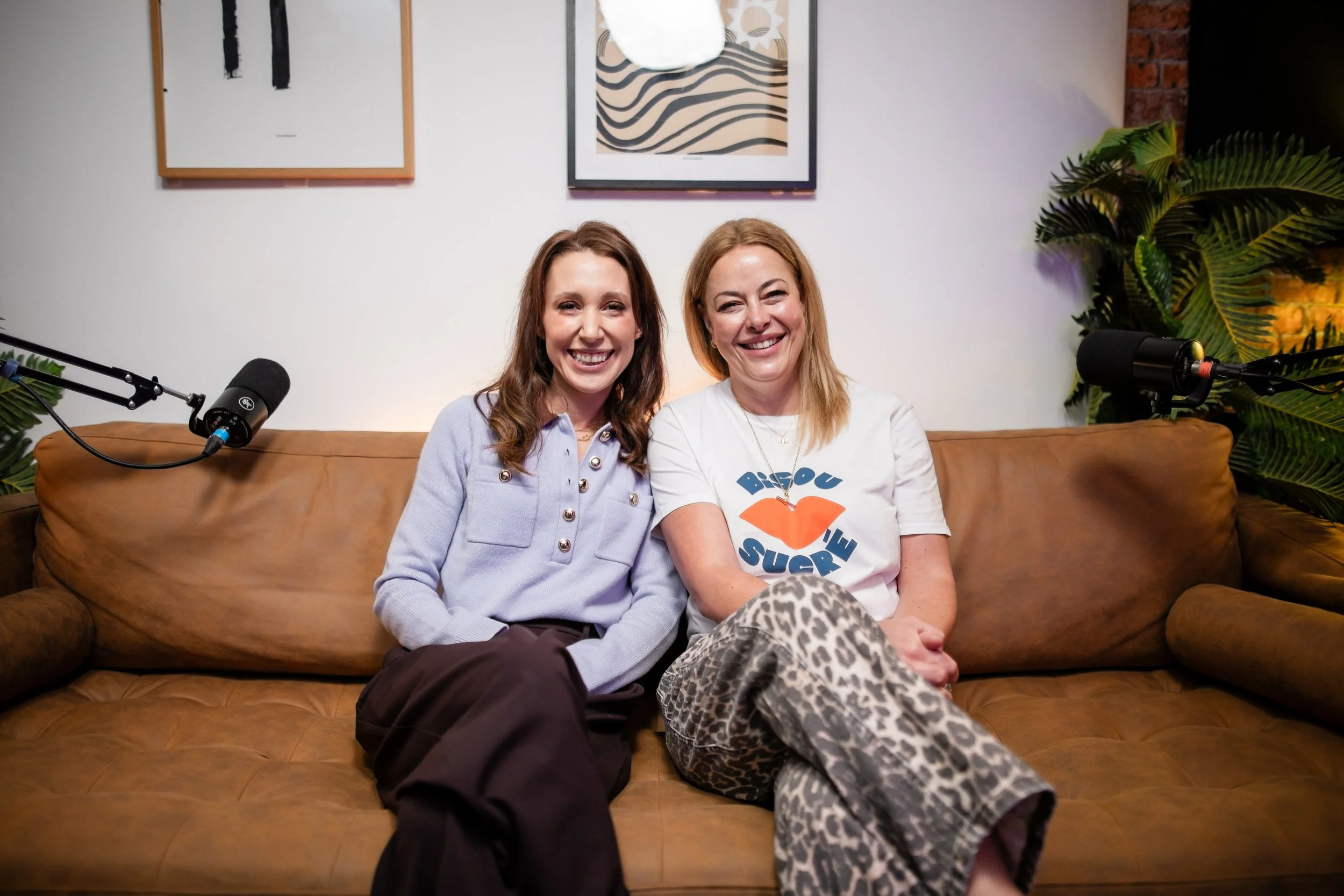
Parenting Unplugged:
Raising Neuro-affirming Families with Charis Halsall
Parenting a dyslexic child in a system that was never built for their brain is hard. Parenting that child while you are still healing from your own school years is something else entirely. In this episode of This Voice Is Mine: The Unquiet Podcast, Dr Emma Offord sits down with parenting coach and Parent Unplugged host Charis Halsall to talk about exactly that.
The problem was never the brain
Charis was diagnosed dyslexic at seven, back when that was rare. The diagnosis helped, but the support she got depended almost entirely on which teacher she had that year. Some offered understanding. Others offered red pen and the assumption she simply was not trying.
How micro-traumas stack up
A dyslexic childhood is rarely one big wound. It is thousands of small ones. The question asked in front of the whole class. The frozen silence. The laptop handed over with the words "now you will be graded exactly the same", and no one to teach her to touch-type. Charis names these as micro-traumas, and explains how they compound into an internal voice that says you are not good enough, long after you leave the classroom.
Choosing self-esteem over catching up
Now a neuro-affirming parent to a dyslexic son, Charis does it differently. Her main objective is not grades. It is keeping his self-esteem intact. She talks about why schools so often try to "catch children up" by giving them more of the work they find hardest, and why that approach exhausts a child who is already working twice as hard to get through the day.
Small changes, real difference
Support does not have to be huge to matter. Charis shares the small, specific changes that have transformed her son's daily experience. Swapping the glaring bright blue maths squares for softer grey. Moving to voice-to-text and watching a short, hard-to-read essay become three times longer and full of ideas he had never been able to get onto the page before. Setting spellings at his actual level, with a visual, so two out of ten becomes five out of five.
Turning a school story into a voice
Charis was told she would never manage a degree. So she built her own. She read over 300 books as a self-described very slow reader, then turned that curiosity into the Parent Unplugged podcast, treating each expert conversation as the education she was once told was not for her. It is a quiet act of outsmarting a system that underestimated her.
If you have ever been told to try harder, if you are parenting a child the system does not understand, or if you are still untangling your own school story, this conversation is a reminder that there is nothing wrong with your brain. It is the environment that needs to change, and there is always another way.
Follow Charis and her work on her Instagram account here.
Diagnosed at seven, support came down to luck
06:00. Charis on getting a rare early diagnosis, and how the help she received depended entirely on which teacher she had.The laptop that made school harder, not easier
07:30. The central story: handed a laptop at 13, told she would now be graded the same as everyone, with no one to teach her to touch-type. Marks dropped from 80% to 20%.He is not being a problem, he is having one
18:20. Charis reframes her son's reluctance to read, and explains why piling on more of the hard work to "catch up" exhausts a child who is already running on empty.Why a child cannot learn in fight-or-flight
22:30. Emma and Charis on the biology of safety: a dysregulated nervous system prioritises survival over phonics, maths or handwriting.Voice-to-text triples the length of his writing
34:30. The parents' evening moment. A short, hard-to-read essay becomes three times longer and full of ideas once he can speak instead of write.Reading 103 books, the degree she was denied
41:00. Told she would never manage a degree, Charis set herself a 100-book year, hit 103, and built the Parent Unplugged podcast as her own education.
How can I support a dyslexic child at school?
Start small and specific. Simple changes like switching bright maths grids to softer grey, moving to voice-to-text, or setting spellings at your child's actual level can transform their daily experience. The goal is not to make them keep up with everyone else, but to reduce the daily overwhelm so they can access learning in a way that fits their brain.
Why does my dyslexic child avoid reading or writing?
What can look like procrastination or a lack of effort is usually a nervous system responding to something that feels too hard or confusing. A child who slumps over the desk, fidgets, or distracts themselves is often having a problem, not being a problem. When the work is set at the right level and delivered in a way their brain can access, that reluctance tends to ease.
What is a neuro-affirming family?
A neuro-affirming family is one where a child feels understood rather than corrected. It means treating a child's brain as valid, protecting their self-esteem over chasing grades, and adapting the environment around them instead of asking them to mask and cope. For a parent who is neurodivergent themselves, it often means finally getting each other in a way the wider world does not.
Should I try to help my dyslexic child catch up with their peers?
Constantly trying to catch a child up often means giving them more of the work they already find hardest, which exhausts a brain that is working twice as hard just to get through the day. Progress at their own pace matters far more than matching a class average. Keeping self-esteem high protects their confidence and their future voice, and that is what helps them flourish.
Can school experiences cause lasting trauma for dyslexic adults?
Yes. Many dyslexic adults carry what Charis calls micro-traumas, the small repeated moments of shame, red pen, and being told to try harder that stack up over years of school. These experiences can leave a lasting internal narrative of not being good enough, and part of healing is recognising that the environment was the problem, not your brain.