
When They Look Fine at School But Fall Apart at Home:
Nervous Systems, Masking, and the Invisible Load of
SEND Parenting with Jo Rodriguez
When They Look Fine at School But Fall Apart at Home: Nervous Systems, Masking, and the Invisible Load of SEND Parenting
With Jo Rodriguez, Health Psychologist and CBT Therapist
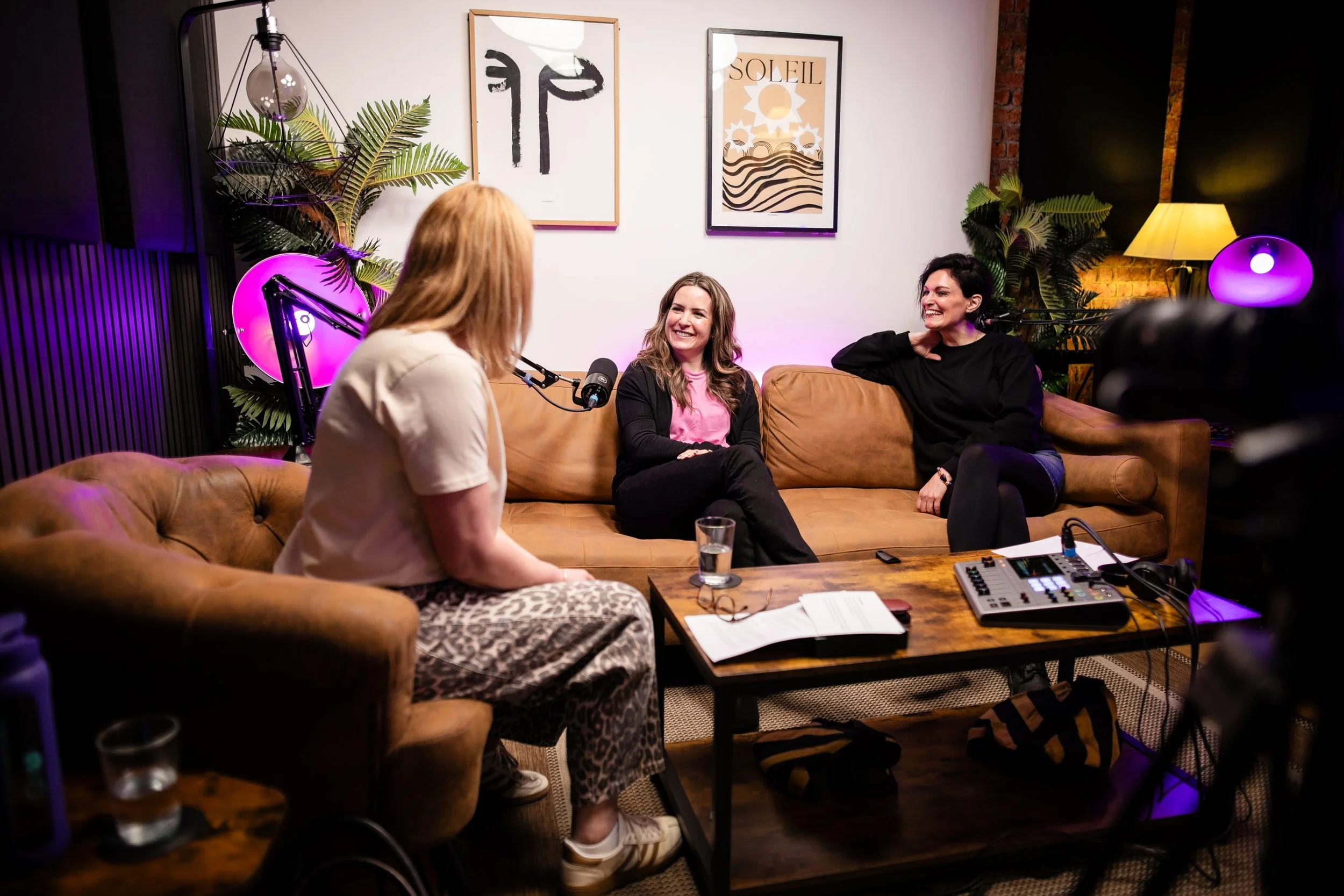
Post-school meltdowns, nervous system dysregulation, and SEND parenting are at the heart of this conversation, and they are far more connected than most people realise. In this episode, Dr Emma Offord is joined by health psychologist, CBT therapist, and EMDR practitioner Jo Rodriguez for an honest, warm, and deeply grounding exploration of what is really happening inside a child's body when they hold it together all day at school, only to fall apart the moment they walk through the front door.
Jo brings more than 20 years of clinical expertise and, equally importantly, her lived experience as a mum to three neurodivergent boys. She speaks with clarity and compassion about the gap between what professionals are trained to know and what parenting actually feels like on the ground.
Why neurodivergent children mask at school and dysregulate at home
When a neurodivergent child suppresses their needs all day in an environment that was not designed for them, something has to give. Coming home does not mean instant calm. It means release.
What looks like a meltdown is actually a nervous system trying to return to equilibrium, having been held under pressure for hours. Understanding this changes everything about how we show up for our children in those moments.
What is really happening in the nervous system
Jo explains the difference between a behaviour problem and a body returning to safety, and why that distinction matters. A child who has been physically bracing, copying, and suppressing all day is not choosing to fall apart at home. Their nervous system is doing exactly what it needs to do.
Unresolved stress has to go somewhere. Jo and Emma talk about what that looks like over time, including the ways it can show up in skin, sleep, and physical health when the body's signals keep going unheard.
The moment a nervous system reaches its limit
Every nervous system has a threshold. For neurodivergent children navigating environments that were never built for them, that threshold is often reached long before the school day ends. Jo and Emma explore what it means to be the family's main regulator: absorbing, catching, and holding the weight of a child's distress, day after day, without enough space to recover in between.
The gap between professional training and parenting reality
Jo speaks honestly about the tension of being a health professional and a SEND parent at the same time. Knowing the theory does not make you immune to the exhaustion. It just means you are expected to look like it does. She wanted to break down the barrier between professional and person, because both things can be true at once. The pressure to have the answers, from teachers, other parents, and yourself, is its own kind of invisible weight.
Being dismissed when you are advocating for your child
One of the loneliest experiences in SEND parenting is being told you are overreacting when you know something is wrong. Emma and Jo name this directly: when the system does not hold your child's needs accurately, it creates a lack of safety that ripples through the whole family.
The burnout that builds from years of advocating, repeating yourself, and not being believed is real, and it rarely gets spoken about openly.
How to talk to children about their nervous system
Jo shares age-appropriate ways to help children understand what is happening in their own bodies. Language that normalises their experience, rather than pathologises it, makes a significant difference to how children understand themselves over time. The goal is for children to grow up knowing: there is nothing wrong with me. The environment was not catering to my needs.
Safe masking as children grow older
As neurodivergent children move into adolescence, social pressure increases and masking becomes more complex. Jo introduces the concept of safe masking: the difference between a child learning to navigate the world on their own terms and a child disappearing into compliance just to survive it.
This is a nuanced and important distinction for parents, practitioners, and anyone supporting a neurodivergent young person through those years.
Parent burnout and the invisible load
When you are the main regulator for everyone in the house, your own nervous system rarely gets a look in. Parent burnout in SEND families is quiet, cumulative, and widely underreported.
Jo and Emma hold space for this honestly, without offering false reassurance. They talk about the shame, the self-criticism, and why knowing the tools does not always make it easier to use them.
Small ways to resource yourself when the big solutions are out of reach
Not every family has access to the support they need. Jo offers practical, grounded ways to begin resourcing yourself even when systemic change feels impossibly far away.
One of the simplest is also one of the most effective: hands on heart, a somatic practice that takes seconds and signals safety to the body. Small things matter. Especially when the big things are still out of reach.
This is a conversation for every parent who has sat in a parents' evening hearing "no bother at all" while knowing something else entirely.
Connect with Jo Rodriguez on Instagram: @straightforwardpsychology
-
Emma:
Hi. This is Dr Emma Offord, host of This Voice Is Mine, The Unquiet Podcast, for every neurodivergent mind that was masked, misread, or missed, where identity is reclaimed and the system gets named.
This Voice Is Mine is a podcast for those who were told they were too much, too sensitive, too chaotic, too intense, or not enough. Hosted by myself, Dr Emma Offord, clinical psychologist, neurodivergent woman, and unapologetic system disruptor. This podcast explores what happens when difference is pathologised, and what becomes possible when we drop the shame, the script, and the medical model.
Through stories, reflections, and conversations with people who were never meant to fit, This Voice Is Mine reclaims the truth of neurodivergent minds, bodies, and ways of being. This is not about fixing or fitting in. It’s about remembering who we are, and unlearning everything they got wrong.
Today’s guest is Jo Rodriguez. Jo is a UK-based health psychologist, CBT therapist, and EMDR practitioner with more than 20 years of experience working across mental health, the NHS, private practice, higher education, and media. She is HCPC registered and BABCP accredited, and brings both deep clinical expertise and a very human voice to conversations about psychological wellbeing.
Alongside her professional work, Jo is also a parent to neurodivergent children. Her lived experience of raising wired, sensitive, brilliant nervous systems has profoundly shaped how she understands anxiety, overwhelm, meltdowns, burnout, and the relentless pressure many families feel to keep coping even when they are running on empty.
Jo speaks honestly about what it means to look functional on the outside while feeling completely done on the inside. Her work blends evidence-based psychology with compassionate, real-world conversations about parenting, identity, nervous systems, and the invisible load so many families carry. Welcome, Jo. So good to have you here.
On being honest as a professional
Emma:
You and I have been Instagram friends for a couple of years. It’s quite funny, meeting in real life. Tell me a little bit about yourself, the work that you do, and your mission on Instagram.
Jo:
I’m a health psychologist by background. On Instagram I’m @straightforwardpsychology, and I came onto Instagram about five years ago. I wanted to talk more about mental health, and to simplify without reducing down good psychological advice. I also wanted to normalise the experience of struggling, and generally help people to feel their feelings.
Emma:
You’re transparent. You talk about struggles you’ve had in your own life, as a parent and in your professional life. What’s it like being on a social platform and talking about the real struggles of your life?
Jo:
It’s not always easy to be honest. That was a real intention at the start, to try and break down the barrier between professional and person. Professionals are people. I didn’t want to be put on a pedestal as somebody who knows more. Yes, I know more in terms of the psychological stuff. But you can know it all and still find it hard. That’s what I really wanted to get across.
There’s a real discrepancy I have in my head. I feel like I want to share the experience, but also sometimes I feel like I don’t want people to see me as less professional. It’s really tricky to be honest and vulnerable and still be seen as someone who knows what they’re talking about. But that is the reality. You can be both.
Emma:
I shared the same experience. How I was trained was to not share any details about yourself. For some people that went as far as wearing the same outfit every time, so you’re this predictable expert and not a person. There’s a long-standing history of professionals not raising their voice or talking about their own personal experiences.
What I see when I look at your Instagram is how people really value the fact that you talk about yourself as a human being. These tools might not end your struggle forever, but they will help you regulate. They will help you cope.
Jo:
Sometimes people really struggle when they’re given something to use and it doesn’t make them feel better, and then they feel like there’s something wrong with them even more. The reality is that a lot of the tools can help, but they’re not going to fix everything. I just wanted to bring in the reality of what it’s like. There’s always more depth needed. But having something in your pocket, something that can get you through a moment, is equally valid.
Parenting neurodivergent children: the gap between knowing and doing
Emma:
Tell me a little bit about your professional work and your personal life as a parent, and how some of that intersects. There are many of us who talk about the struggles of parenting while also helping parents with those struggles.
Jo:
I have three neurodivergent boys who are all very different. I work with a lot of parents and neurodivergent clients. Throughout my psychological training I specialised in health, and I had this expectation that when I had children I would know what to do. And then having children completely changed my perspective. It was so hard, and I wasn’t expecting it to be.
I think there is a huge gap between what you know or think you know, and the reality of raising kids. As a psychologist there’s also an extra pressure, because people expect that you’re the one who always knows what to do. Teachers at school have an expectation that I know. Sometimes I don’t know. Sometimes I just want someone to say, it’s okay not to know.
Emma:
No one knows, do they? There’s an idea put out there that if you read this or do that, things are going to work out. What I love about your voice is that it doesn’t get into that. It’s not suggesting there’s a perfect way. We are all in it together. We are all struggling. It is messy.
Diagnosis, dismissal, and advocating for your child
Jo:
When my eldest was born I just was not prepared for how hard it would be. He cried a lot. He was only ever content when he was on me. There was always a constant pull between what I’d read, what I felt I should do, and the pressure of other people telling me what I should do.
At different developmental stages I always had this feeling that there was something, but equally he’s just my son. Maybe this is what children are like. When we got the diagnosis, he was eight. We had the usual two-year wait on the NHS, and the school saying that without a proper diagnosis, it’s not really accepted.
The diagnosis was really about trying to amplify my voice. I was saying, I feel like there are all these things he needs support with, and it’s just being ignored. I was being seen as an irrational mum, someone who was mollycoddling. Those words really grate on me. Maybe I am sensitive to his emotional needs, but he has these emotional needs. Why are they not being met?
The diagnosis validated that, and it helped me fight his corner a bit more. It doesn’t change who he is. It doesn’t change the fact that he’s still lovely and wonderful. It just helps me to help him learn what he needs.
Emma:
What you say there is so important. So many parents, and I’m going to say mums because that’s mainly who I speak with, when they start to notice their child’s needs and try to advocate for them, that is shut down by so many people. A completely different narrative gets created about being over sensitive, an anxious parent. And the lack of safety that creates, because when your child is going into a system like school, you need people to hold that information accurately.
Jo:
Absolutely. You try and advocate, you try and explain, and people kind of shut you down. Because they see you as an over-anxious parent, they don’t actually see the child for what they need. And then he learned to mask. He learned to manage in certain situations. So they would say, well, he’s fine. And he was fine there. But then he would come home, and I would have a very different story.
What is actually happening in a child’s nervous system
Emma:
That’s a really common narrative. A child is masking in school, nothing is overt or visible, and then you have the meltdown after school. You talk a lot about nervous system and burnout. Can you tell me what might be going on for that child? Their nervous systems are surely being hugely affected by the masking.
Jo:
Children learn to adapt to survive in an environment. They understand how they need to be in a place, because they may be copying or mimicking, or just trying to survive there. But then when they come home to a place of safety, their body tries to get back to a place of equilibrium, having had to suppress how they feel for such a long time, or hold themselves in almost a physical bracing.
As the observer, you experience that as a meltdown. But what’s happening internally is the nervous system trying to regulate, to get back to a place where it can feel calm or at rest. It’s not a behaviour problem. It’s a body returning to safety.
Emma:
Some people might assume that as soon as a child gets home, they’ll feel safe and everything will be okay. What you’re describing is a process that has to take place before a child can transition back into calm. What might seem like anger or a meltdown could feel very confusing for a parent.
Jo:
It can be different depending on the child. I can often tell how much mine have had to hold in that day based on how they are when they come out of school. One has to run around and go crazy and expend loads of energy. Another one does it in a way that some people might perceive as aggressive, but really he’s just trying to shout out what he’s had to hold in.
All I see is little nervous systems trying to get back to a place where it feels safe. Our bodies are designed to keep us safe. If we’ve been in an environment all day where we haven’t felt physically or emotionally safe, but we’ve been able to manage, we then need somewhere freer. As an adult experiencing that it might feel quite challenging, but if you understand what’s going on, it’s not personal. It’s not, why are you doing this at home? It’s, what do you need to go through this, and how can I help?
I’m not saying it’s easy, by any stretch. We have our own nervous systems. If we’ve had a busy or stressful day, it’s hard as an adult. We’re learning too. We have to regulate our own emotions and then try to help a little one regulate theirs.
When the environment is the problem
Emma:
This brings me to the idea of whether kids are safe in school. The idea is that school is safe, and it’s not safe to not be in school. But when people hear you talk about a nervous system not feeling safe, they might think, well, there’s nothing directly threatening happening to that child. If we go to the nervous system level and think about a child that needs movement, how is that a sense of threat?
Jo:
If you have an innate need, not a desire, a need, to move and to do things that help you feel better in certain environments, and you just can’t do it, and maybe you even get told off for doing it, then what you do is suppress what you’re feeling all the time. That adds more and more stress to your body. And that stress needs to go somewhere. It can turn into physical health conditions, autoimmune conditions, mental health conditions.
When we talk about safety, we’re saying it takes so much physical and emotional energy to perform in a certain way, to fit into an environment that just isn’t suited for that body. And the message that sends is: there’s something wrong with me as I am. Very young developing nervous systems and minds and bodies that can’t be embodied, that cannot listen to or express what their body is communicating. And this is a daily thing.
Emma:
Unexpressed, unresolved stress that doesn’t get metabolised finds its way out.
Jo:
Exactly. My youngest has urticaria, hives. I have it too. I can tell if he’s had a really stressful period at school, because his skin comes up in lumps and bumps everywhere. In the holidays, where he can be himself and it’s much more relaxed, he doesn’t get it. His body is physically responding to an environment where he’s struggling to conform.
Yes, they can learn how to behave, to be accepted in a certain environment. But when a little body is not designed to work in that way, they just grow up thinking there’s something wrong with me, rather than: there’s absolutely nothing wrong with you. It’s the environment that’s not catering to your needs.
The constant struggle a lot of parents have is this: you see what your child needs, and you see that the school isn’t able to provide it, but you’re stuck between, what do I do? How do I manage this? All of my children appear to be okay in school. My middle son will never ask questions, will never speak up, but internally he really struggles with processing and sequencing of instructions. He’s seen as a bit of a daydreamer. He tries so hard, and they say, but he’s no bother.
He comes home and he’s completely wiped out. It’s so hard to speak up for your children when you know it’s a systemic problem. It’s not the individual teachers. It’s so much bigger. But equally, you have to do something when it’s your kids.
Talking to children about their nervous system
Emma:
If we can’t change the system, then what are we supposed to do? How can we help children self-advocate? How can we help them know what’s happening when they go into school and then come home? How do you talk to your children about those nervous system experiences?
Jo:
I just try to speak what happens, and say it as simply as that, recognising that at different ages I might say it in a different way. For my little ones, I try to help them understand: you find school really hard because you can’t move and talk, and that’s what you need to do. It’s really understandable. At home you can do it, which is why home feels so lovely. I’ll do all I can to try to help you in that environment, but I understand it’s really hard.
I just try to meet them where they’re at, help them recognise it’s not a them problem.
Emma:
Naming what is really happening is enough sometimes. It could be sensory, it could be about nervous system, it could be about emotions. Naming what’s happening and helping them make the link. That might be happening because you’ve been stuck at school all day. Or that uniform is scratchy. Helping them make more accurate links, because the links they’re often getting are inaccurate. You’re naughty, you’re lazy, you haven’t tried hard enough. Or, on the other side, you’re perfect, you’re so compliant, when actually they’re the internaliser who’s stuck.
Jo:
And sometimes I get it wrong. Sometimes I’ll say something at the wrong time. Sometimes what they actually need is food and for me to keep my mouth shut. It’s always a learning curve.
One of mine would take blue tack from our house to use as a fidget toy at school. It kept getting confiscated. Then one day at parents’ evening I saw all these pictures hanging off the wall, and my child said, well, I found the blue tack. Those are the stories where you see a child outsmarting the system because they feel safe enough to know what they need.
Emma:
That could have been seen as vandalism. But when you really understand what your child is doing, they’re not trying to be destructive. They’re simply trying to figure out a way to make themselves feel a bit better.
When a nervous system reaches its limit: the fight response
Emma:
When might it tip into something more destructive? I’m thinking from a trauma point of view, when a nervous system has had enough. What might that look like?
Jo:
It comes when they’ve had to hold it in for such a long period of time, or when they’ve been misunderstood, and they just reach a point where they can’t contain it anymore and it all spills over. My youngest is only seven. When he is overstimulated, or has gotten over-excited playing with his brothers, it very quickly bubbles over. He can’t cope, and boom. It is challenging, because you want to keep the child safe but you also don’t want your house to get trashed.
Sometimes I have had to shut myself in a room with him and sit, and ask, what do we need to do to help calm down? Maybe I give him a pillow and let him thrash that around a bit. Then when he’s much, much calmer, we have a conversation. And as he’s getting older, it’s not always about regulating after. It’s about trying to reduce the stimulation before, so it doesn’t get to that point.
No matter what we do after, if he does have a meltdown, he feels bad. He’s filled with shame. I did that. I’m stupid. And trying to help him recognise that’s not the case, that this thing happened and he just couldn’t hold it, that his brain switched into that mode. The shame afterwards, when the red mist clears, that’s a really tough place for a child.
Emma:
And the system has to take some accountability. If the system wound them up all day, they just didn’t do that. That’s not in their control. It’s not in our control as parents either. How could we expect young people to be able to manage all of that?
Safe masking as children grow older
Jo:
As they get older, I’m noticing that they’re trying to hide more. When they were younger, if I said to the school they need XYZ, maybe they were allowed it. Now they’re older, they don’t want that, because they don’t want to be perceived as different. That’s really hard when you’ve worked so hard as a parent. Then the social pressures start, and it feels like it starts to unravel a little bit of what you’ve done.
Emma:
It’s really painful. At some point they do need to make those decisions. It makes sense. They want to fit in with their tribe. Sometimes I describe that as safe masking. As long as it is safe masking, where they’re aware they’re doing it, and making a choice, and what they’re gaining is something they really desire, then there’s a degree of safe masking there. But it still has an impact on the nervous system, whether it’s safe and conscious and has a reward at the end. You can’t escape from that.
Parent burnout: where is the space for you?
Emma:
When you’re the main regulator, when you’re doing the observing and managing and you’ve got all these nervous systems running around the house, there isn’t a space for your nervous system. That’s where burnout often starts.
Jo:
It’s so, so hard, because parents are learning as well. You’re learning on the job. Before I did any training I didn’t know anything about nervous system regulation. You’re trying to re-pattern what you didn’t have, or relearn. And then you’re doing that whilst trying to be the source of regulation for everyone else.
Humans co-regulate. We regulate well off each other. So if the environment feels calmer, we feel calmer. But if you have little nervous systems that completely depend on you, and adult nervous systems that depend on you too, it becomes physically and emotionally exhausting to always be that person. You can reach a point of burnout.
I go through cycles of it. Cycles of feeling energised and feeling completely depleted. I’ve started to learn the difference. About two months in, I have no space in my head, I just want to do the bare minimum every day. That’s me getting to a place of: I’m full. I need to recharge. And then I’ll go again.
It’s a case of learning what you need, how you can drop anything that isn’t essential, trying to create ways to give yourself space, trying to change old beliefs about what you expect of yourself.
Emma:
Dropping anything that isn’t essential. I live by that. It will be things like a ready-made meal, or it will be cutting corners without judging yourself. The biggest blessing I ever gave myself was a declutterer. Things like that make such a difference. If my house is full of clutter, I feel like I spend my life trying to manage it. You need some areas where you feel calm. If you can do anything like that, cut corners. It doesn’t matter. The only person judging you at home is you.
Jo:
We’re not looking for big solutions. Resourcing can be found in these small, cumulative breaks that we give ourselves, where no one else is watching. It’s also about making adjustments aligned with what is possible for your life. If you can buy frozen vegetables instead of fresh, just go for it.
The hands-on-heart practice
Emma:
I wanted to ask each of my guests to bring something they could share with listeners as a holding or grounding theme for them. What did you bring?
Jo:
I brought an idea. The thing that has been most transformative for me is so simple. If I am stressed, anxious, particularly self-critical, or just a bit overwhelmed, I simply put my hands on my heart and breathe, and I talk to myself.
It sounds a bit cringe when you say it out loud. But I cannot explain how transformative it’s been. I’ve only done this for about three years. I also have an autoimmune condition that affects my heart, so this really soothes me. I just put my hands on my heart, take a breath, and say something reassuring to myself. Something like, it’s okay, or I hear you, or I’m here. Just to acknowledge that I’m listening.
Emma:
I think that’s beautiful. When everything feels like it’s too fast, I’ve been pausing. We can’t just take a holiday and forget it all, but we can pause. Acknowledging to yourself what you’re going through. Sometimes just that is so powerful. We’re so focused outwards on trying to sort everything and make sure everyone’s okay, that we forget we are physical beings too.
Jo:
The repetition matters too. Keep going with it. The first time might feel a bit silly or it doesn’t quite land. Keep trying. Even just taking a breath and checking in with yourself, how am I feeling right now, what do I need, just acknowledging that you’re a person with needs. You exist. You’re a human.
Final words
Emma:
If there is a parent listening right now who feels like they’re just about holding everything together, but inside they’re exhausted and overwhelmed, what would you want them to know?
Jo:
You’re not alone. That is such a shared experience that people don’t talk about enough. We see you. In those moments you do feel alone. You feel like you’re the only one who can’t cope, like there’s something internally failing. None of that is true.
Emma:
And my final question: when you hear the words, this voice is mine, what do they mean to you?
Jo:
Our individual difference, and the fact that that’s a good thing. It’s good that we have individual voices. It’s good that we’re not all the same. And the fact that we all need to speak up, and not be ashamed or embarrassed of our individuality and our difference.
People are going to listen to your voice and love this podcast. We all deserve to have that. We deserve to be able to have our voice. Our children deserve to have that voice too. To recognise that that’s what makes the world a better place. And it’s a road to safety for their system.
Emma:
Thank you so much for joining us today, Jo. It’s been a great pleasure to have you.
Jo:
Thank you for having me. Anytime.
Time-stamped sections of the episode:
03:00: Jo introduces herself and her Instagram mission
Jo explains why she came to social media and her intention to normalise struggle while making good psychology accessible.
09:00: The gap between training and parenting reality
Jo describes what it was like becoming a mum to three neurodivergent boys and discovering that professional knowledge does not protect you from the overwhelm.
13:30: Advocating for a diagnosis and being dismissed
Jo shares the two-year NHS wait, being perceived as an over-anxious parent, and how the diagnosis helped amplify her voice without changing who her son is.
17:30: What actually happens in a child's nervous system after school The conversation's central explainer: masking, physical bracing, equilibrium, and why the post-school meltdown is a body trying to regulate, not a behaviour problem.
25:40: Stress that goes unmetabolised shows up in the body Jo shares how her youngest's skin flares during term time and clears in the holidays, as a direct example of what suppressed stress does to a child's physical health.
44:30: The hands-on-heart grounding practice Jo shares her personal somatic tool: hands on heart, breath, and a few words of self-acknowledgement as a simple and repeatable way to resource yourself.
Why does my child behave perfectly at school but have meltdowns at home? Your child is not misbehaving. When a neurodivergent child spends the day masking, copying others, and suppressing their needs to survive a demanding environment, they use enormous amounts of physical and emotional energy. Home is the safe place where their nervous system can finally release that, and what looks like a meltdown is actually the body returning to equilibrium.
What is a post-school meltdown and is it normal? A post-school meltdown is what happens when a child who has held themselves together all day finally reaches safety and their nervous system lets go. It is not a behaviour problem and it is not a sign that something is wrong with your child. It is a nervous system doing exactly what it needs to do after a long period of suppression.
How does masking at school affect a child's body? When a child suppresses their natural needs repeatedly, day after day, that stress does not simply disappear. It accumulates in the body and can show up as disrupted sleep, skin conditions, physical tension, or anxiety. The environment is creating the difficulty, not the child.
What can I say to my neurodivergent child after a meltdown? Simple, honest language works best. Helping your child understand that their nervous system was working hard all day, and that home is the place it gets to rest, gives them an accurate story about themselves rather than a shaming one. The goal is for them to grow up knowing there is nothing wrong with them.
Why do I feel burnt out as a SEND parent? When you are the main regulator for everyone in the house, your own nervous system rarely gets a chance to recover. SEND parent burnout builds quietly and is widely underreported, partly because parents are so focused on advocating and holding everything together that there is little space left for their own needs. Recognising the cycles and making small adjustments where possible is not a luxury; it is necessary.
How can I help myself as a SEND parent when big solutions are out of reach? Resourcing yourself does not have to mean big changes. Small, cumulative breaks matter: cutting corners without judgement, reducing decision load, and taking a moment to check in with your own body. Even something as simple as placing your hands on your heart and taking a breath can signal safety to your nervous system when everything else feels like too much