
From Silence to Voice
Charlotte Hunt on School, Survival and Raising Neurodivergent Kids
From Silence to Voice: Charlotte Hunt on School, Survival and Raising Neurodivergent Kids
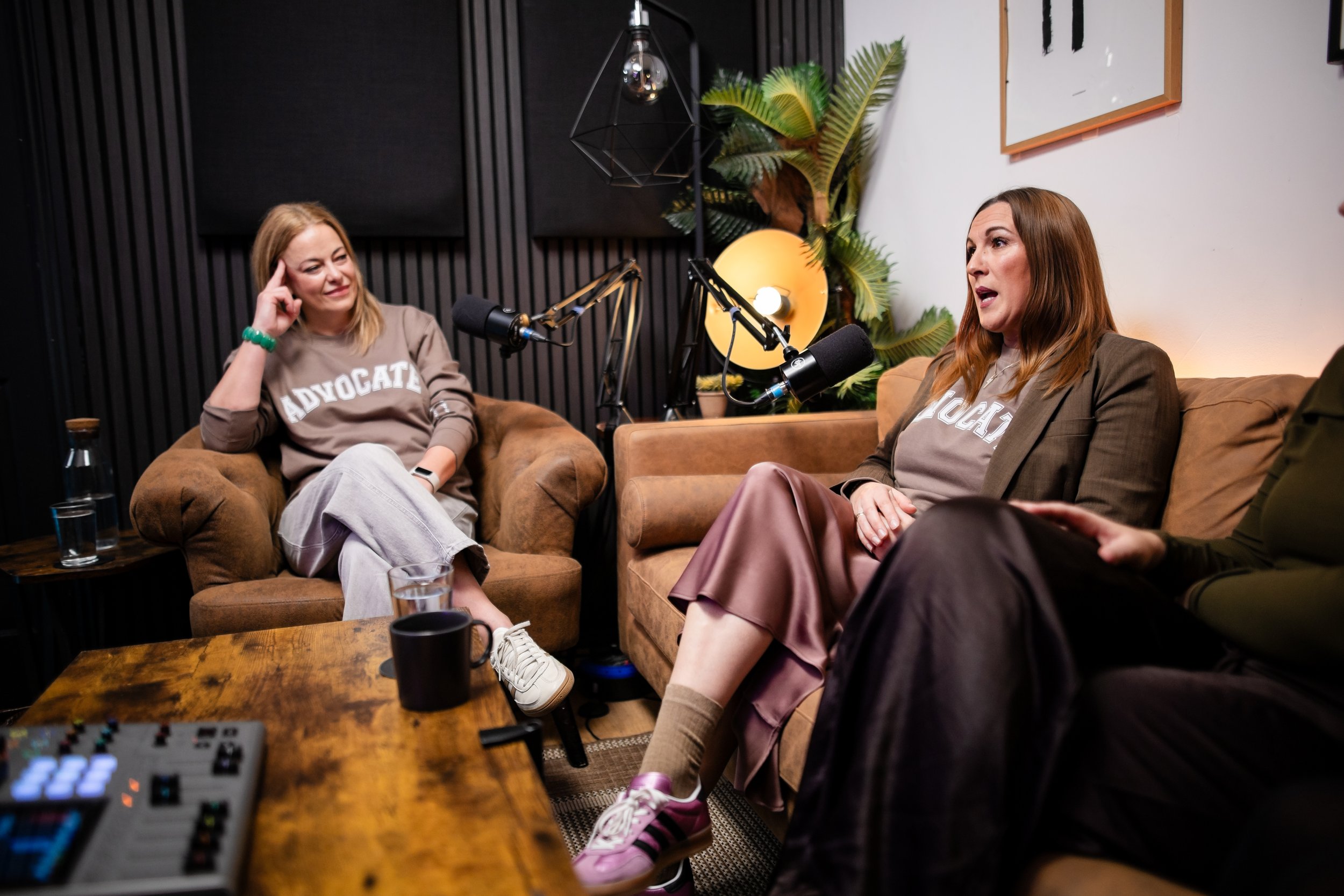
Charlotte Hunt, known to many as Twin Tides and Autism Vibes, joins Dr Emma Offord for one of the most honest conversations in the series. SEN parenting, neurodivergent identity, and the long road to finding your voice are at the heart of this episode, woven through Charlotte's story of leaving school at 14, raising four children with complex needs, and slowly becoming more herself in midlife.
What Happens When Coping Strategies Run Out
For many late-identified neurodivergent people, the strategies that kept them afloat in childhood eventually stop working. Charlotte speaks openly about what it looks and feels like when those strategies finally reach their limit, and what it takes to find a different way forward.
Masking, Unmasking and Becoming Full-Size
Masking is often invisible, even to the person doing it. Charlotte and Emma explore the long process of unmasking in midlife, what it means to grow into your full-size self, and why not everyone around you will welcome that shift.
The Vulnerability of Online Advocacy
Sharing your story publicly takes courage, especially when that story involves your children, your health, and your struggles. Charlotte reflects on the vulnerability of building an online presence rooted in truth, and the particular weight of being seen when your lived experience is the work.
The Fatigue of Holding Everything Together
So many neurodivergent women carry enormous invisible loads for their families, their communities, and everyone in their orbit. This conversation names the exhaustion honestly, without minimising it or rushing to fix it.
Neurodivergent Needs Inside a Neurodivergent Household
When multiple family members are neurodivergent, the dynamics are layered and the needs can pull in different directions. Charlotte talks about navigating that complexity with honesty and love, and what happens when your own needs get quietly deprioritised.
Why Connection Is the Antidote to Shame
Shame thrives in silence and isolation. Charlotte and Emma return again and again to the power of finding the right people, the ones who see you clearly and stay. That sense of community and scaffolding is not a luxury for neurodivergent people; it is a genuine need.
The Power of Finding Your People and Your Scaffolding
Charlotte's journey has been shaped by the moments she found her tribe. Whether online or in person, those connections have held her through the hardest chapters and reminded her that her voice is worth using.
Charlotte's voice is raw, real, and deeply validating. She reminds us that growth lives in the uncomfortable, that our stories are never wrong, and that the magic happens when we stop trying to be perfect and start being honest.
Connect with Charlotte on Instagram @twins_tides_and_autism_vibes
-
Emma: Hi. This is Dr Emma Offord, host of This Voice Is Mine: The Unquiet Podcast. For every neurodivergent mind that was masked, misread or missed, where identity is reclaimed and the system gets named.
Emma: This Voice Is Mine is a podcast for those who were told they were too much, too sensitive, too chaotic, too intense, or not enough. Hosted by myself, Dr Emma Offord, clinical psychologist, neurodivergent woman, and unapologetic system disruptor.
Emma: This podcast explores what happens when difference is pathologised, and what becomes possible when we drop the shame, the script, and the medical model. Through stories, reflections, and conversations with people who were never meant to fit, This Voice Is Mine reclaims the truth of neurodivergent minds, bodies, and ways of being. This is not about fixing or fitting in. It's about remembering who we are, and unlearning everything they got wrong.
Emma: Today's guest is Charlotte, or as many of you know her from her Instagram, Twin Tides and Autism Vibes. Charlotte is mum to Jude and Tommy, whose story has taught hundreds of us so much about neurodivergence, love, and resilience. She is also mum to twin girls, who she describes as incredible with the boys.
Emma: When she's not in full family mode, she's part of the team behind SAA Clothing Shop Autism Awareness, a brand that celebrates and advocates for the autism community. In our conversation, Charlotte talks honestly about life with her family, the highs and the lows, and the reality of navigating life as a SEN parent. Charlotte is an absolute powerhouse and a beautiful soul, and this conversation was full of honesty, vulnerability, and more truths than I can count.
Charlotte: I was a school refuser. I didn't finish school. I left at 14, and it wasn't because I wasn't academic. It wasn't because I hated it. It was that I could not learn the way they wanted me to learn.
Charlotte: The teachers loved me. Everyone liked me. But it was always, you're too disruptive, you're too disruptive. I was falling behind, and I like to be really good at everything I do. I don't do things I'm not good at, because I won't feel good about myself.
Charlotte: So when I was failing, I stopped going. And once I stopped, going back was way too hard. Looking back, leaving at 14 was really difficult, and I do regret it, because I missed opportunities that might have led me somewhere different. But my personality has always got me through.
Charlotte: I had a very young mum. She had me at 19, and she wasn't ready. My nan kind of took over, a strong German woman who gave no shits about anything. She guided me until I was around four, and then my mum took over, and it was a different way of growing up.
Charlotte: My mum is also neurodivergent. She's only just been diagnosed, which has been really difficult for her. She is autistic, and she's always just been, I suppose I'd say a bit different. I didn't know anything else, so I didn't have language for it. And if I'm honest, I kind of mothered her.
Charlotte: I didn't have to go to school because she didn't make me go. So it was easy to stay home. At 14, the Nintendo seemed like a good idea. But with that came feeling very isolated, and I am not good at being isolated. I need people to excel.
Charlotte: So I changed things around quickly. I moved out of home at 14 and a half and went to live with a friend who had a much more stable home life. She had the mum, she had the dad. Her mum was American and owned her own business, and back then businesswomen weren't such a thing. I was in awe of her. Her dad was very traditional and steady. I thought, this is a bit of me. And because I'm good with people, they said yes.
Charlotte: I stayed there until I was 18 or 19. And I think because of my childhood, I've coped really well with the bizarreness of what our life is now. Nothing seems bizarre to me.
[around 5:30]
Charlotte: I'm very accepting. I understand that life doesn't always go the way it's meant to. Having all these different characters around me, it was always the women who were the big personalities. The men sat back. And my dad, I didn't actually meet him until I was 14. Long story, I was a love child. But when we found each other, it was beautiful, because we're actually very similar. Big personality, very funny. We're now very close.
Charlotte: I'm 44 soon. I've known him a lot longer than I haven't known him, which is something beautiful to have gained. But it's still a lot to navigate when you're young.
Charlotte: And now I'm probably going through perimenopause, and my body is saying, Charlotte, we've given you a good ride. Now we're really coming for you.
Charlotte: I was hit with health anxiety two years ago. Something I'd never had before, though actually it probably started quietly in Covid. I didn't know what it was. And then the last two years it's really taken hold.
Charlotte: It's the belief that I am dying. I'm sitting here now and I'm not spiralling in this moment, but it's like, I just felt that little lump in my head, that's definitely something. And it's a spiral. My body telling me something is really wrong.
Charlotte: It started with actual chest pains, and that's still there at times. I went through periods of not sleeping all night, pacing the hallway, looking in on the children one last time. I don't know if that comes from years and years of living on the edge, of go, go, go, and trusting that I could always turn things around at the last minute.
Charlotte: I think my body said: we're not allowing you to do that anymore. This might be its way of slowing me down, because it's the only way it can. And when I look back, I've actually always been scared of dying, even as a small child. So perhaps it's always been there, and youth and adrenaline just kept it at bay.
Charlotte: We've almost become too comfortable with feeling comfortable. And it is part of our nature to feel uncomfortable. It's really important. Even to be offended sometimes. People nowadays, you can't say this, you can't say that. But actually the biggest growth I've ever had has always been in the uncomfortableness.
Charlotte: Not quite knowing why I didn't fit in at school, even though I had friends, I was popular, I wasn't being bullied. Moving out at 14, navigating all those big emotions. The growth came in the uncomfortable bits. And those uncomfortable bits have made me the person I am today, and I am proud of that.
Charlotte: I'm strong, I'm resilient, and I feel I make a difference. To my friends, to my children, and now to strangers online. But none of that could have come without living in the uncomfortable.
[around 11:15]
Emma: You were saying something there about when we speak up, when we voice our own truths, our own beliefs, our own experiences. That can be really hard. For me, having been a professional where you're not supposed to share anything about yourself, you're the therapist, you're not meant to have uncomfortableness, and if you do, you don't talk about it.
Emma: So for me there is, and I know we talked about this idea of masking and unmasking, but I do feel like I'm taking down the therapist-role mask, and becoming more of an advocate, speaking more of my truth. There is quite a lot of vulnerability in doing that.
Emma: But it is so important to grow that full-size self and to expand. And not everybody likes that. People can feel threatened by you, by what you're achieving, by what you have to say. It's uncomfortable doing that, isn't it.
Charlotte: Change is uncomfortable at times. But I also feel the power in relating to people. If you say something to somebody, even in therapy, that makes them feel seen, there's power in that. Why stay silent, nodding, writing notes, saying I'm just here to hear your story?
Charlotte: The biggest gift in life is storytelling. That's what changes people's visions and paths. Hearing a story that you feel empowered by, or that you can relate to. A therapist has many stories. I have friends who are therapists. They've also gone through many hours of therapy themselves. They've got way more going on than most people sitting in the room with them.
Charlotte: There's something really powerful about giving therapy, needing therapy, and working all of that out together. You offer therapy as a service, but you're also there showing the world that you are not perfect. And people need to know that the person hearing them is not perfect. Because if they think you are, they won't believe they can get there.
[around 13:55]
Emma: When I see what you do, what you have to say, there's such heart in it. And I know there will be people reaching out to you, thanking you, because they feel seen through your words. Through you advocating, but also through you showing that life is hard, that there isn't always space for yourself. You've made life work over and over again.
Charlotte: People say things like, Jude slept for two hours a night for around four years. And they'll say, I don't understand how you look so good, how you seem fine. But what's the other option? To stay in my pyjamas, not brush my hair? That's not an option for me. That would feel like failing.
Charlotte: But I am failing in secret ways. I'm behind on the washing. The house is not as nice as I'd like it to be. I'm not all together. But what is together? My together is: four children, working every day, everyone fed and watered, trying to make a difference. My bedroom is a mess. I haven't done the washing. So I have to accept that wherever you look, there will be something.
Charlotte: I do wish I could find some balance. I need help with that at the moment. I feel like my relationship with Carl has definitely changed since I started my page. He sees how invested I am. And I think I'm so invested because it's the first time something has really been about me.
[around 16:09]
Emma: And this is what I mean about growing full size. How it's not always comfortable for other people. Because the space you maybe gave them, the presence you had for them, changes. It becomes more for yourself, for what you believe in, what you want to achieve. And they can push back against that.
Emma: My family aren't always happy with what I'm doing. One of my children said just the other day, I just preferred it when you weren't always on Instagram. Which isn't entirely true, but there's something in it.
Emma: There is this pushback. And advocacy doesn't come with instant reward or a guaranteed income. You have pushback, you have people who judge you. There's real vulnerability there. It does take resourceful people who have a sense of justice and drive for change. And quite often it puts your relationships at risk.
Charlotte: My page is 100% authentic. I only post an hour before I actually post it. I never schedule. I never look at what's trending to find a subject. It's life experience, or how I'm feeling that day.
Charlotte: Some days posts get loads of likes, some days nothing. And as a person you can't always help but take that personally, because you've worked so hard. I've done posts where I gave everything, and there's no traction, no one sees it the way I see it. And then I'll do a throwaway post and it takes off.
Charlotte: I've got better at separating myself from it. Before it would be, oh, that didn't do well, why wasn't it good enough? Now I'm more like, this post is for me. If one person likes it, great. If a thousand people like it, great.
Charlotte: But this is the first time in my life that I've done something where it's my name, my face, me pressing send. I have this huge sense of responsibility to it. It feels like another child that needs nurturing. I don't want to let people down. But most of all, I don't want to let myself down.
[around 18:56]
Emma: A lot of what I want this podcast to be about is showcasing people who step into that position of giving voice to the unsaid. Highlighting the vulnerability in that. Showing that you're not just creating a pretty post and the likes come easily. There's a lot of vulnerability. It is like your baby, or you're very exposed in doing it.
Charlotte: Maybe that's a fire you need. It's a new drive. It's like a diary you're allowing people to read every day. Very private to you, but very out there for everyone else. And it still feels private in a way, because you're not sitting in an open forum where people are saying, we just read that. You choose whether to look at the comments or not.
Charlotte: I feel a deep connection to it because it's me. My voice, my thoughts, my feelings. I feel very protective of it. I couldn't imagine going on holiday for two weeks and not looking at it. Some of my good friends say that's not healthy, you need a break. But it's hard to take a break from something that feels like your biggest purpose right now.
[around 20:52]
Emma: I would explain it the same way about myself. It is part of my neurodivergent profile. It's how I operate in this world. I'm all in. There is fire, there is energy. And I think that is part of a really creative way of investing in something. What I do is with integrity. It's from the heart. My identity is right there. I can't fake it.
Charlotte: No, you can't. And I think yours is slightly different, because I feel like you're very authentic about who you follow back too. You follow people who make a difference to your thinking, your page. A lot of accounts just follow back everyone. Yours feels more like a two-way street.
Charlotte: I go to your page to feel seen for me, not to feel seen as a parent or as Jude and Tommy's mum. I look at your page to feel seen as Charlotte, as a person. So your page works very differently.
Charlotte: And those pages are needed. I don't always want to see another post about parenting when I've just parented all day. Sometimes I need to see something that helps me regulate. I think a lot of people get one-track minded and think, I'm on this autism parenting journey, so I should only follow autism parenting pages. But there are so many other resources out there that could help a parent so much more.
Charlotte: And you don't have to be neurodivergent to follow a neurodivergent page. A lot of parents become a product of their environment. You may not be autistic or ADHD yourself, but you're living it every day. You start to feel it. Following a page that guides you in those things may really help.
Charlotte: I never minded babies crying or busy airports, until Jude and Tommy were bothered by it. Their behaviours became my triggers, because I've had so many difficult experiences with them in those situations. Now when a baby cries in an airport, I go straight back to a very hard place. I need help regulating too. Because of that.
[around 24:10]
Emma: You've brought something back up for me that I was thinking about when you were talking about the different neurodivergent profiles within your household. I was wondering what happens to Charlotte's neurodivergent needs, because your own accommodations probably go out the window quite a lot of the time.
Charlotte: They do. And I always know when I'm not okay. My light goes out. I get very quiet. I become flat. It's like a Coke that's lost all its fizz.
Charlotte: It doesn't happen a lot, but when it does, people notice. Because I'm always happy, or if not happy, I'm at least on the ball, we're doing this, we're doing that. When I sit back and go quiet, people say, what's wrong with you?
Charlotte: And I used to get angry about that when I was younger. If I was quiet, people would say, what's wrong with you. And I'd say, why do I have to be the entertainment all the time? Even in relationships, in friendships. If I sat back a bit, no one else stepped up. I'd start getting frustrated. Someone else can bring the energy tonight.
Charlotte: I don't mean to be front and centre, but I think it's become so natural that people expect it. And when I am quiet, maybe that's part of why I'm uncomfortable in the quiet too. Because people around me are uncomfortable, and I'm not comfortable with people being uncomfortable. It's a snowball effect.
Charlotte: I think the biggest thing I need to learn is to figure out what actually makes me happy. I don't really know.
[around 26:08]
Emma: You've mentioned this a few times. The idea that in all these experiences, you're so outwardly focused on others.
Charlotte: I don't even know what the experience of being inwardly focused feels like. I take joy from other people's joy. And I know that's kind of its own thing, because giving is still selfish in a way, you get to see the reaction, and that makes you feel something. But I do need to learn how to do the next stage of life.
Charlotte: I've been good at childhood, teenhood, twenties, thirties. You threw things at me and I caught them. But I'm now in my forties, and I'm really struggling.
[around 27:07]
Emma: And this is what so many of us describe. That neurodivergent female perimenopausal experience, where the wheels start to come off. Where we take stock. Just because we can doesn't mean we always should. And we can't, actually, necessarily keep at that pace any longer, or sustain that energy.
Charlotte: And I don't even know if my wants and needs are the same anymore. That's the problem. Everything has shifted. It literally happened as soon as I hit 40. A light went out and then something changed, and you couldn't write it.
Charlotte: I'm feeling very insecure about it, because I've always been so good at knowing what to do. I've lived in different places, navigated terrible pregnancies, terrible births, trauma, all sorts. But I can't navigate the forties. I just can't do it.
Charlotte: I think the hormone imbalance is one I was never prepared for. I don't know how to be the next version. And maybe that's what I need to work out. What is the next version?
[around 28:30]
Emma: That's exactly how I've been thinking about it. I turned 50 not long ago, and here I am contributing to a book, doing the podcast. Some people around me, maybe some family members, think I should be slowing down, not creating a different version of myself.
Emma: But I don't feel like it's a different version. I feel like it is this growing full size thing. It took me a long time to work out where I was going to grow, in what way, with who, how. It's only just starting to take some shape.
Emma: But I completely feel what you're saying. You take stock, you do this kind of reevaluation. I call it a positive disintegration, where lots of things just stop being what you can do anymore, or what you want anymore.
Charlotte: What you want anymore. Yes. I just need to work out what the next is for me. I know I'm invested in my work, in my family, in the advocacy. I just don't quite know how to enjoy it. And that's what I want to work out.
Charlotte: Because it's going to take a lot of work and strength to keep growing and keep going. I just want to feel authentic and happy doing it this time. When you're young, you do it on adrenaline and everything feels good. When you're older, it doesn't feel like that. I want to find the beauty in the quiet. Which I don't know how to do. I don't really like the quiet.
[around 30:19]
Charlotte: I did start going to therapy, and it has probably been one of the biggest game changers. Talking is huge. It's the biggest outlet for our brains. And dumping, getting it out, is massive. That has definitely helped.
Charlotte: I just need to get more consistent. Which is not my strong point. But I also know that for something to work, you actually have to do it for more than four or five days
Emma: You're speaking to the wrong person there. I'm a very inconsistent person myself.
Charlotte: And as you get older, you do have to be more conscious of your health and what your limits are. I can't do what I used to do at 25. I'm not in the same shape. That's just the truth.
[around 31:03]
Emma: So Charlotte, because we're pretty much at the end of our conversation. For those parents out there who haven't yet found their voice, who maybe walk in your footsteps a little because you're advocating for them and for their families. What would you leave them with? Something that feels meaningful to you in this journey of advocacy. It doesn't have to be profound. Just something that matters.
Charlotte: I think the biggest thing in advocacy is never feeling that your thoughts and feelings are wrong, or that they have to match somebody else's. If you feel that your style of parenting is the way you need to go, keep going on that path.
Charlotte: Find the people who are on your path. Because if you find something you're passionate about, something that means something to you, you will naturally find your tribe. And when you have a tribe behind you, it becomes fun. And when it becomes fun, it becomes powerful.
Charlotte: It's all about finding connections with people who think like you do. And even if they don't think like you do, but you still vibe with them, connect with them. Because sometimes the magic is actually meeting someone who makes you think differently.
Charlotte: So what I'd say is: it's all about connection. Send that DM for the first time. I get messages saying, you probably won't see this. But I do see it. And I will reply if we're on the same wavelength. Connection. Definitely, 100%.
[around 33:16]
Emma: I completely agree. Having that social scaffolding, that safety in relationships, especially when you're speaking up.
Charlotte: And validating each other. When I do a post and you or other followers say, I love this, or reshare it, it makes you feel seen. It makes you feel validated. The more hearts you get, not in numbers, but from people you know and respect, it makes you feel good. And it takes nothing to do that.
Emma: It does. And especially when you're an advocate, I think people maybe don't realise that you also need to be seen and responded to. You want to help others be heard, but you're human too. You need that relational nourishment as well.
Charlotte: And to hear, well done. That can give someone what they need to say, okay, I'll do it again tomorrow. And we want you to do it again tomorrow. Because your voice matters.
Emma: Cheering you on. So Charlotte, where can listeners find you?
Charlotte: I'm at Twins Tides and Autism Vibes on Instagram. I don't really do other platforms. That's where I'm mainly at. Maybe one day. But for now, my heart is with Instagram.
Emma: Thank you so much. It's just been a joy.
Charlotte: It's been so nice. I've loved every bit of it.
00:11: Meet Charlotte: SEN mum, advocate, Twin Tides
01:57: Leaving school at 14 and what it cost
08:30: Health anxiety, perimenopause and the body saying stop
11:15: Unmasking, growing full size and the pushback it brings
16:09: Advocacy, relationships and the price of finding your voice
24:10: When your own neurodivergent needs disappear completely
Why do so many neurodivergent women only get identified in midlife?
Many neurodivergent women spent decades masking, adapting, and finding ways to cope that made their differences less visible to others and often to themselves. It is frequently a child's diagnosis, a perimenopause shift, or a moment of burnout that finally brings their own needs into focus. Late identification is not a failure; it is the result of systems that were never designed to see them.
What is SEN parenting and why is it so exhausting?
SEN parenting means raising a child with special educational needs, which often involves navigating assessments, school meetings, EHCP applications, and advocating loudly in spaces that were not built to listen. It is relentless, often invisible work that sits on top of everything else a parent is already carrying. Many SEN parents are also neurodivergent themselves, which adds another layer of complexity and unmet need.
What does masking mean for autistic and ADHD women?
Masking is the process of hiding or suppressing neurodivergent traits to fit in, appear neurotypical, or avoid negative reactions from others. For many women, it starts in childhood and becomes so automatic that they lose a sense of who they actually are underneath it. Unmasking, often in midlife, can feel both liberating and deeply unsettling.
Is it normal to feel like you are falling apart in your 40s as a neurodivergent woman?
It is far more common than most people realise, and it makes complete sense. Perimenopause, changing life demands, and decades of masking can all converge at once, making previously workable coping strategies feel suddenly insufficient. This is not a breakdown; it is often the beginning of a more honest and sustainable way of living.
How does perimenopause affect neurodivergent women differently?
Oestrogen plays a significant role in how the brain regulates dopamine, attention, and emotional processing, which means hormonal shifts during perimenopause can intensify ADHD and autistic experiences in ways that feel sudden or overwhelming. Many women find that traits they had managed for years become much harder to navigate during this phase. For some, perimenopause is actually what leads them to seek an assessment and receive a late identification.
Why do neurodivergent advocates and online creators experience burnout?
When your purpose is deeply tied to your identity, stepping back from it is genuinely difficult, particularly for neurodivergent people who tend to invest with great intensity and passion. Holding space for others while navigating your own unmet needs is costly, and the expectation to be consistently visible and available online adds additional pressure. Recognising that advocates need support and community too is an important part of sustainable advocacy.